Autoterm Troubleshooting Guide: Fix Common Issues
Comparing 2D and 4D Models

Autoterm heaters are known for their reliability and efficiency, providing consistent heating for your vehicle, camper, or boat. However, like any mechanical device, they may encounter issues from time to time. Here's a troubleshooting guide to help you identify and resolve common problems with your Autoterm heater:

Heater Fails to Start:

  • Check the fuel level in the tank. Ensure there is enough fuel for the heater to operate.
  • Verify that the fuel line is not kinked or blocked, preventing fuel from reaching the heater.
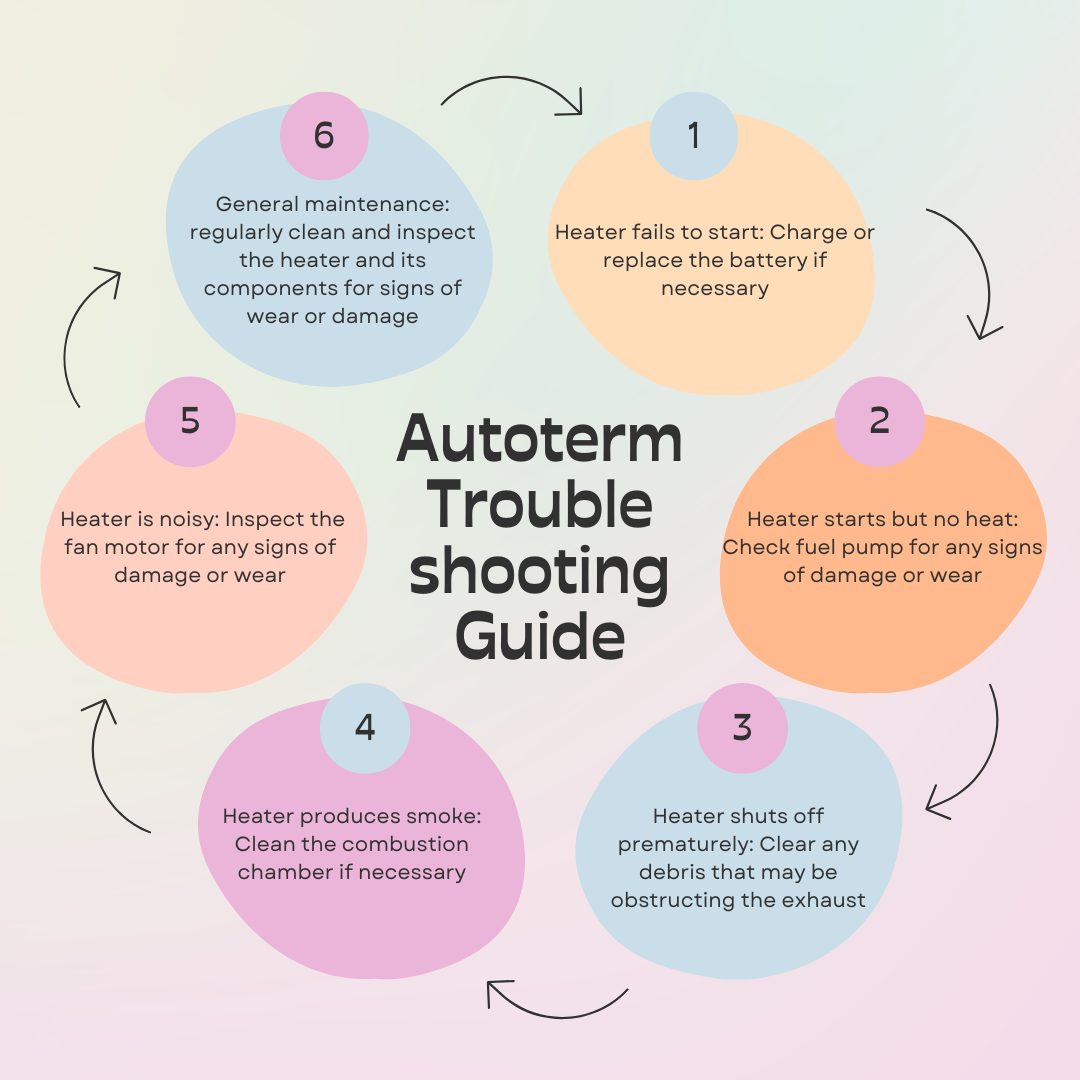
  • Check the battery voltage. Low battery voltage can prevent the heater from starting. Charge or replace the battery if necessary.

Heater Starts But Doesn't Produce Heat:

  • Check the fuel pump for any signs of damage or wear. Replace if necessary.
  • Inspect the fuel filter for clogs or blockages. Replace if needed.
  • Check the glow plug for proper operation. Replace if it is damaged or worn out.

Heater Shuts Off Prematurely:

  • Check the exhaust system for blockages or restrictions. Clear any debris that may be obstructing the exhaust.
  • Inspect the air intake and exhaust vents for blockages. Clear any obstructions that may be preventing proper airflow.
  • Ensure that the fuel tank is vented properly to allow for proper fuel flow to the heater.

Heater Produces Smoke or Unusual Odors:

  • Check the combustion chamber for any signs of dirt or debris. Clean the combustion chamber if necessary.
  • Verify that the fuel being used is clean and free of contaminants.
  • Inspect the exhaust system for leaks or damage. Repair or replace any damaged components.

Heater is Noisy During Operation:

  • Check the mounting of the heater to ensure it is secure and properly aligned. Adjust or tighten the mounting as needed.
  • Inspect the fan motor for any signs of damage or wear. Replace if necessary.
  • Check the fan blades for any obstructions or damage. Clear any debris that may be causing noise.

Remote Control or Timer Not Working:

  • Check the batteries in the remote control or timer and replace if needed.
  • Ensure that the remote control or timer is properly paired with the heater. Re-pair if necessary.
  • Check the wiring connections between the remote control or timer and the heater for any loose or damaged wires. Repair or replace as needed.

General Maintenance Tips:

  • Regularly clean and inspect the heater and its components for signs of wear or damage.
  • Keep the air intake and exhaust vents free of debris to ensure proper airflow.
  • Use clean, high-quality fuel to prevent clogs and damage to the heater.

By following these troubleshooting tips, you can keep your Autoterm heater running smoothly and efficiently, ensuring a comfortable environment, no matter the weather outside.


People Also Ask:

Q. What is an NV Autoterm diesel heater best for?

NV Autoterm diesel heaters are best for providing reliable, fuel-efficient heat in off-grid, mobile, and cold-climate environments. These heaters are designed for applications where consistent warmth is critical and grid power may be limited or unavailable, including remote cabins, vans, RVs, boats, and work vehicles. Their diesel-fired design, compact size, and controlled combustion support long run times and dependable performance in harsh conditions.

Q. Who should use an NV Autoterm heater?

NV Autoterm heaters are ideal for off-grid homeowners, marine operators, mobile professionals, and users in remote or cold locations. They are commonly used by van lifers, fishermen, contractors, and cabin owners who rely on diesel fuel already available on-site or onboard. These heaters are well suited to users who value dependable heat and the ability to troubleshoot and maintain equipment independently.

Q. Can an NV Autoterm heater handle extreme cold conditions?

Yes, NV Autoterm heaters are engineered to operate reliably in extreme cold when installed and configured correctly. They are commonly used in northern climates where sub-zero temperatures are routine. Most cold-weather issues identified during troubleshooting relate to fuel quality, battery voltage, or airflow rather than heater failure.

Q. Is an NV Autoterm heater suitable for beginners?

NV Autoterm heaters can be used by beginners, though basic mechanical and electrical understanding is helpful. Installation and troubleshooting involve fuel lines, wiring, and airflow routing. Users who follow installation manuals and troubleshooting steps carefully can operate these heaters successfully.

Q. How reliable are NV Autoterm diesel heaters?

NV Autoterm diesel heaters are considered reliable when installed properly and maintained according to manufacturer guidelines. Most issues encountered in the field relate to voltage drop, air leaks, or fuel delivery problems. Routine inspection of wiring, fuel lines, and air paths supports long-term reliability.

Q. What results should users expect from an NV Autoterm heater?

Users should expect steady, controllable heat output with efficient fuel use during extended operation. Once operating correctly, NV Autoterm heaters maintain interior comfort in cold conditions with consistent performance. Most common issues can be resolved through proper troubleshooting rather than equipment replacement.

Q. What power supply issues commonly affect NV Autoterm heaters?

Low or unstable voltage is one of the most common causes of NV Autoterm heater startup and shutdown problems. These heaters draw higher current during ignition, and weak batteries or undersized wiring can trigger faults. Proper battery capacity, clean connections, and correct wire gauge are essential.

Q. Do fuel problems cause most NV Autoterm heater faults?

Yes, fuel delivery problems are a leading cause of NV Autoterm heater faults. Air leaks, clogged filters, incorrect pump orientation, or poor fuel quality can prevent proper ignition. In cold climates, diesel fuel gelling is a frequent contributor to startup issues.

Q. Why does an NV Autoterm heater shut down after starting?

An NV Autoterm heater may shut down shortly after starting due to airflow restriction, overheating, or insufficient combustion air. Blocked exhausts, crushed intake hoses, or improper ducting can cause internal temperatures to rise too quickly. The heater’s safety systems then trigger a shutdown to prevent damage.

Q. How does NV Autoterm compare to other diesel heaters when troubleshooting?

NV Autoterm heaters offer clear diagnostics and documented troubleshooting steps compared to many generic diesel heaters. Error codes and service guidance make it easier to identify root causes rather than replacing parts unnecessarily. This is especially valuable in remote locations where service access is limited.


Explore Other News Vault Articles:

To top