Tank vs Tankless Water Heaters: A Comprehensive Comparison for Homeowners
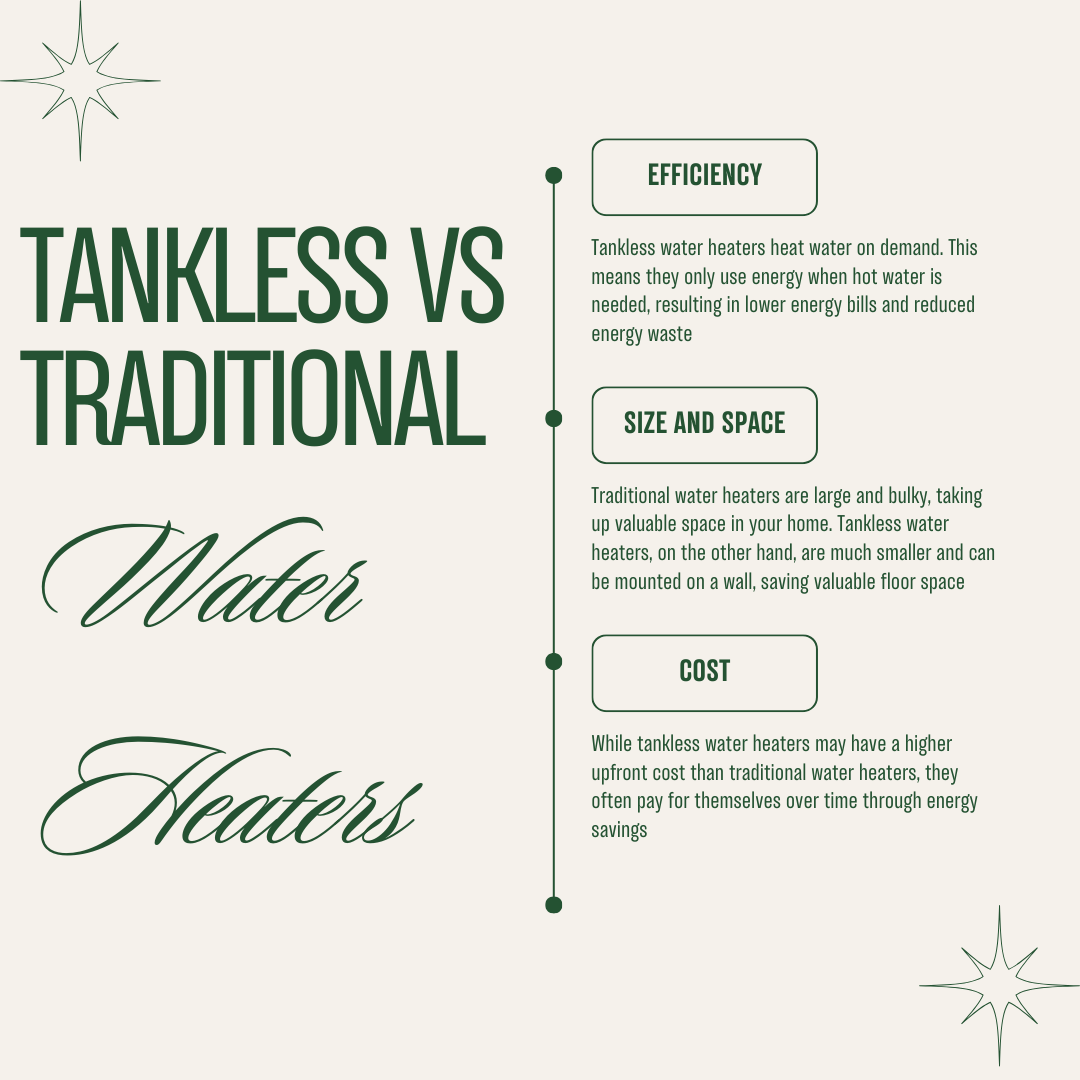
tankless vs non-tankless water heaters

When it comes to choosing a water heater for your home, there is a time when it comes to deciding between a tankless water heater or a traditional tank-style water heater. Both options have their own set of benefits and drawbacks, it's important to understand the differences between the two before planning. Let's take a closer look at the key differences between tankless and traditional water heaters.

Efficiency

Tankless water heaters are known for their energy efficiency. Unlike traditional water heaters that continuously heat and reheat water in a tank, tankless water heaters heat water on demand. This means they only use energy when hot water is needed, resulting in lower energy bills and reduced energy waste.

Size and Space

Traditional water heaters are large and bulky, taking up valuable space in your home. Tankless water heaters, on the other hand, are much smaller and can be mounted on a wall, saving you valuable floor space. This makes tankless water heaters ideal for smaller homes or apartments where space is limited.

Hot Water Supply

One of the main advantages of tankless water heaters is their unlimited hot water supply. Since they heat water on demand, you'll never run out of hot water, no matter how much you use. Traditional water heaters, on the other hand, can run out of hot water if they are not sized correctly for your household's needs.

Lifespan and Maintenance

Tankless water heaters typically have a longer lifespan than traditional water heaters. They are also easier to maintain, with less risk of leaks or corrosion. Traditional water heaters, on the other hand, may require more frequent maintenance and have a shorter lifespan.

Cost

While tankless water heaters may have a higher upfront cost than traditional water heaters, they often pay for themselves over time through energy savings. Additionally, many utility companies offer rebates or incentives for installing energy-efficient appliances like tankless water heaters.

Both tankless and traditional water heaters have their own set of benefits and drawbacks. Ultimately, the best choice for your home depends on your individual needs and budget. If you're looking for a more energy-efficient, space-saving option with unlimited hot water supply, a tankless water heater like those offered by Toyotomi may be the right choice for you.


People Also Ask:

Q. What is a tank water heater best for in rural or cold-climate homes?

A. A tank water heater is best for homes with predictable hot-water demand and simple installation requirements. Tank-style water heaters store a set volume of heated water, typically 30–80 gallons, making them dependable for cabins, seasonal properties, and households with steady daily routines. In remote areas where service access may be limited, their straightforward design can be an advantage. For rural homeowners who value simplicity and lower upfront cost, a properly sized electric, gas, or oil-fired tank unit delivers consistent performance. When installed with freeze protection and proper venting, they perform reliably even in extreme cold conditions common across Alaska and northern regions.

Q. What is a tankless water heater best for in off-grid or full-time residences?

A. A tankless water heater is best for homes that need continuous hot water with improved long-term energy efficiency. Unlike storage systems, tankless units heat water on demand, meaning you are not maintaining a full tank of hot water around the clock. This can reduce standby energy losses and improve overall operating efficiency. For full-time rural residences, larger families, or facilities with high daily use, tankless systems provide virtually unlimited hot water when properly sized. Brands such as Rinnai and Bosch are designed to deliver consistent output, even in cold climates, when installed according to manufacturer guidelines.

Q. Can a tankless water heater handle multiple showers and appliances at the same time?

A. Yes, a properly sized tankless water heater can handle simultaneous showers and appliances. Performance depends on the unit’s flow rate, measured in gallons per minute, and the temperature rise required in your climate. In colder regions, incoming groundwater temperatures are lower, so selecting the correct capacity is critical. For larger households or commercial sites, contractors often recommend higher-BTU tankless models or multiple units in parallel to ensure stable output. Correct sizing and professional installation are essential to avoid flow limitations.

Q. Is a traditional tank water heater suitable for seasonal cabins?

A. Yes, tank water heaters are often well suited for seasonal cabins and intermittent-use properties. Because tank systems are simple and widely understood, they are easier to drain, winterize, and service. This makes them practical for cabins that are unoccupied for extended periods. When paired with proper freeze protection and installation best practices, tank units provide dependable hot water without complex setup requirements.

Q. How energy-efficient are tankless water heaters compared to tank systems?

A. Tankless water heaters are typically more energy-efficient because they eliminate standby heat loss. Storage tanks continuously maintain hot water temperature, even when no fixtures are running. Tankless systems heat water only when needed, which can reduce overall fuel consumption in many full-time residences. Actual savings depend on household usage patterns, fuel type, and climate. In high-demand homes, tankless systems often deliver noticeable efficiency improvements over time.

Q. What hot-water performance should homeowners expect from a properly sized system?

A. Homeowners should expect steady temperature delivery and reliable output when the system is correctly sized and installed. A tank system provides hot water until the stored volume is depleted, after which recovery time is required. Tankless systems provide continuous hot water within their rated flow capacity. In extreme cold climates, professional sizing is especially important. Groundwater temperature and building demand directly affect performance, so matching BTU capacity to application ensures consistent results.

Q. Do tankless water heaters work with propane and natural gas in rural areas?

A. Yes, many tankless water heaters are designed to operate on propane or natural gas. This flexibility makes them well suited for rural and off-grid properties where propane is commonly used. Proper venting, gas line sizing, and combustion air supply must meet manufacturer and code requirements. Working with experienced HVAC or plumbing professionals ensures the installation meets safety and performance standards.

Q. Can tank water heaters integrate with hydronic or boiler-based systems?

A. Yes, certain tank-style water heaters and indirect tanks can integrate with hydronic systems. In homes using boilers for space heating, indirect water heaters or storage tanks connected to the boiler can provide domestic hot water efficiently. This approach is common in colder climates where hydronic heating systems are already in place. System design should account for load calculations, recovery rate, and peak demand to maintain comfort across both heating and domestic water needs.

Q. Which option is easier to install in remote locations: tank or tankless?

A. Tank water heaters are generally simpler to install, while tankless units require more detailed planning. Tank systems often involve straightforward plumbing and venting, especially in electric configurations. Tankless systems may require upgraded gas lines, specialized venting, and electrical connections. In remote communities where parts and service access are limited, installation complexity and long-term serviceability should be part of the buying decision.

Q. How should rural homeowners decide between tank and tankless water heaters?

A. Rural homeowners should base the decision on usage patterns, fuel availability, installation conditions, and long-term operating costs. Tank systems typically offer lower upfront cost and simple maintenance. Tankless systems provide continuous hot water and improved efficiency for higher-demand households. In extreme cold or off-grid environments, selecting equipment proven in harsh conditions and supported by accessible parts and technical guidance helps ensure long-term reliability. A properly sized and professionally installed system will deliver safe, efficient hot water for years to come.


Explore Other News Vault Articles:

To top