HOW MUCH HEATING OIL IS BEING WASTED?

A SEEPING EXPERIMENT IN TENAKEE SPRINGS, ALASKA.

by Kevin Allred, Toyotomi service person. 4/18/24
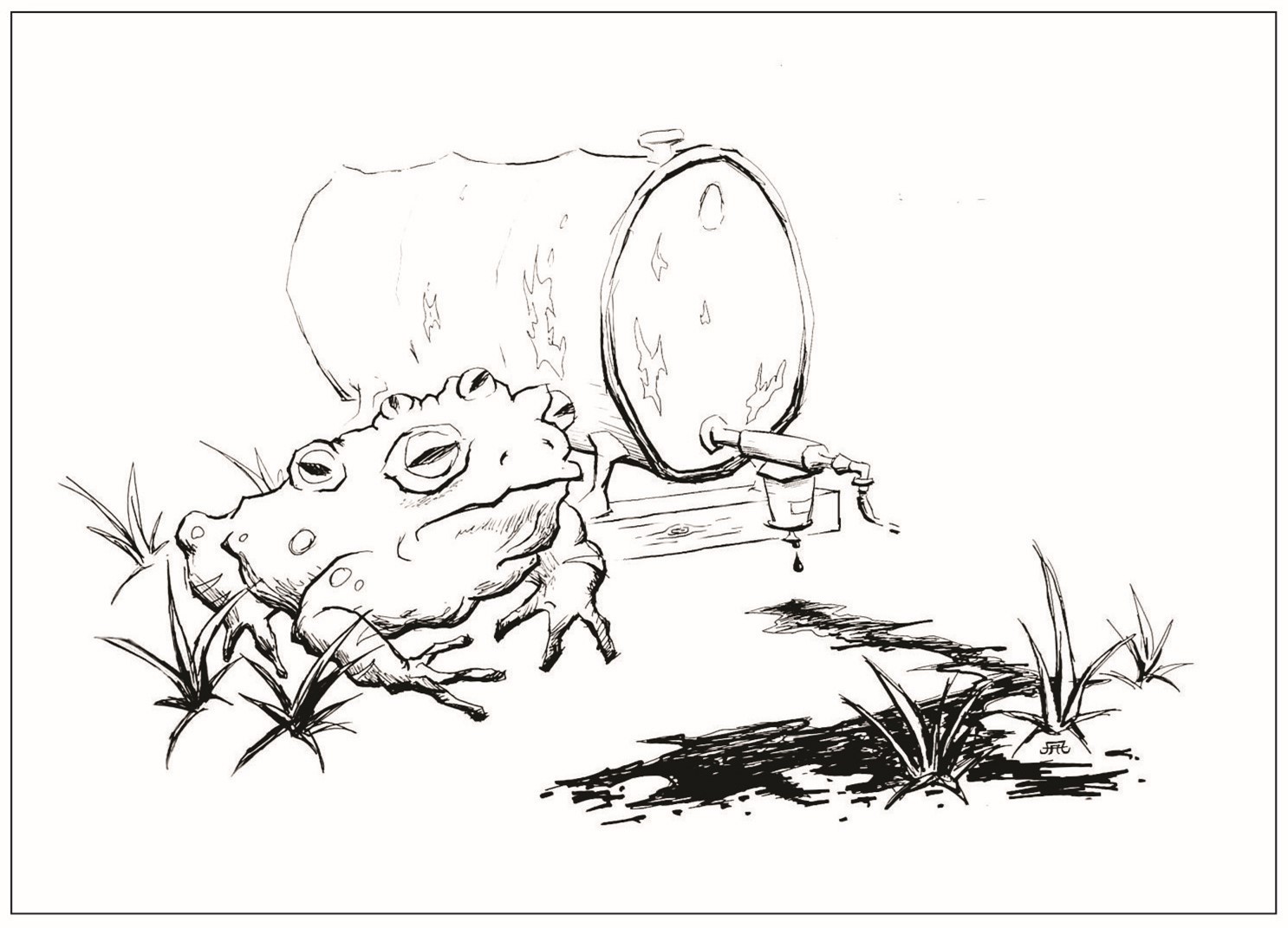
Oil Seep Frog

INTRODUCTION AND METHODS:

For years, I've noticed many of the #1 fuel oil filters and fittings associated with feeding Toyo heaters are plagued with minor seepage of oil. Typically, the oil spreads around the area of the leak causing a damp to wet surface but may not be actively dripping. The fuel is obviously evaporating faster than it can drip. These leaks cause strong odors around the leak. In worse situations, the leak forms a free drip, exceeding the evaporation rate. In my Town about 25 percent of homeowners using a Golden Rod filter experience these types of leaks, not including additional problems with seeping fittings away from the filters or associated with General Filters.

Curious about the actual rate of fuel loss, I did an experiment using a medical IV bag to time and control the rate of drip into a Golden Rod filter which was loose in its housing. A bit of sawdust on the surface of the filter bulb helped duplicate dust, dead insects, and debris often sticking to such leaks (see figure 1). This debris creates an even greater surface area for fuel oil to diffuse to and evaporate. I was unable to get the entire bulb damp, as is common in actual leaks. Thus, it is likely the actual fuel losses can be greater than my tests.

Once the drip rates were established, I went to a USGS site to determine gallons lost in time https://water.usgs.gov/edu/activity-drip.html. Since the viscosity of fuel oil is different than water, this is only an estimate. I made my measurements at approximately freezing temperatures out of the wind. I would imagine evaporation increases in breezy conditions, or when the temperatures are warmer.

RESULTS:

I found controlling the drip rate was difficult but feel confident that the produced drip rates are consistent with the minor seeps commonly observed in the field.

Below are three different drip rates with the resulting loss of gallons per day, month, and year. 1.32 minutes/drip (has a hanging drip at the bottom of the filter) leaks out .075 gallon/day, or 2.25 gallons/month, or 27 gallons/year. 2.26 minutes/drip (no hanging drip at the base of the filter) leaks out .041 gallons per day, or 1.23 gallons/month, or 14.76 gallons per year. 5 minutes/drip (no hanging drip at the base of the filter) leaks out .02 gallon/day, or .6 gallons/month, or 7.2 gallons/year.
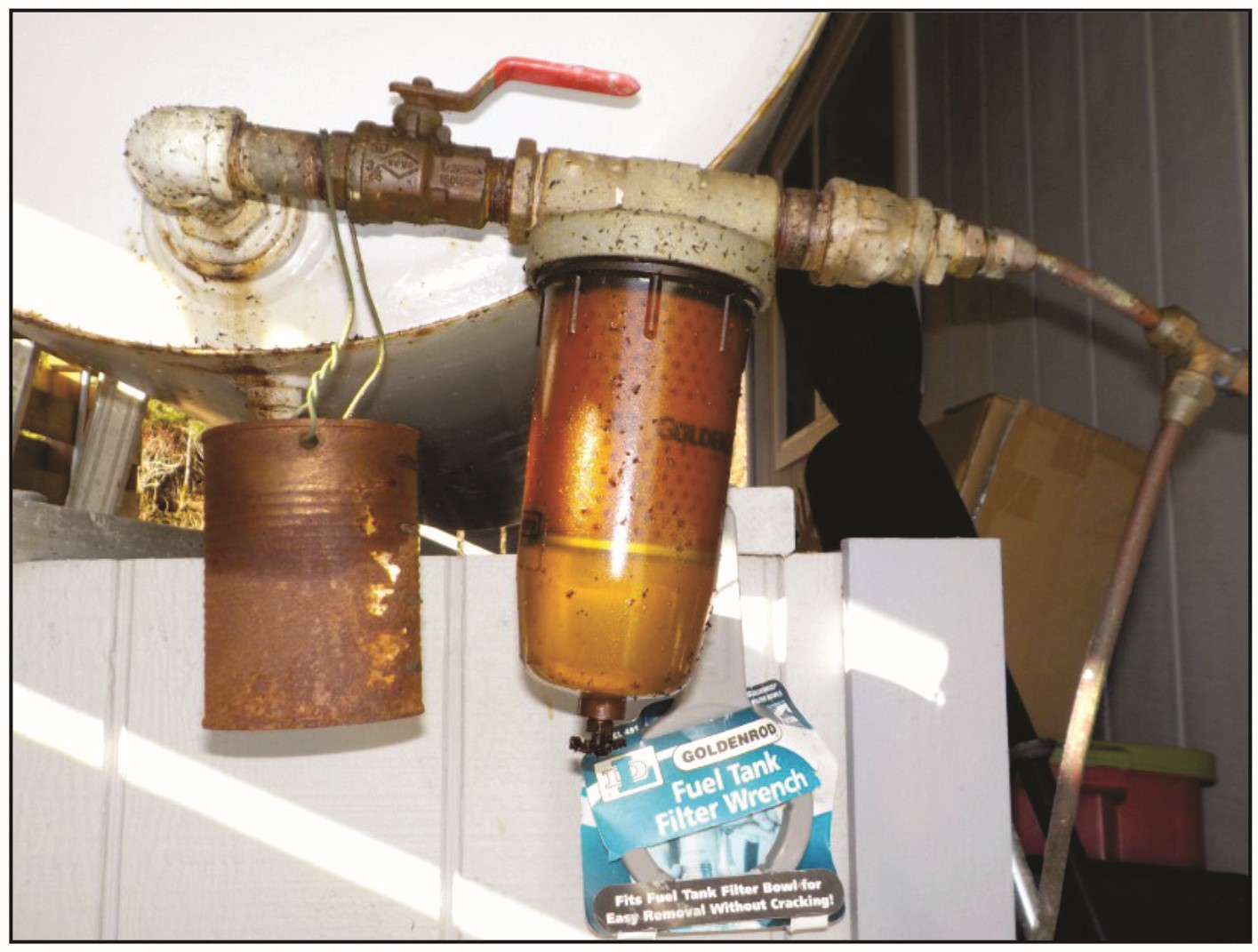
Figure one

Figure 1. In this example, fuel seepages occur all the way from the tank to beyond the filter, including the upper part of the hanging can (via the suspending wire). Note the dead insects scattered on the damp fuel surfaces. The history of this installation would indicate that over the last 16 years it has been leaking to equal at least two of the 14 gallon/year moderate seeps noted above, which equals 472 gallons total.

HOW TO STOP THESE LEAKS:

Having clean surfaces and some oil on the filter gasket helps seal the filters (using a proper filter wrench). If a sharp instrument has been used in the past to dig out the rubber gasket from the housing, there will be gouges and scratches that make a tight seal impossible. These might be carefully sanded with very fine sandpaper after removing the housing for easier access. But it might be better to just buy new filter housing. If the water drain at the bottom of Golden Rod filters has been tightened with pliers or wrench, the bulb threads may crack open later, causing a major fuel leak. General Filters may have issues with scratches, casting porosity, or rust on their sealing surfaces.

It is common for homeowner flare fittings to leak, and these should be re-flared properly to stop seepages there. I like to use the heavier "refrigeration" flare nuts, which are less likely to go egg-shaped like the cheesy 3/4" flare nuts do. Teflon tends to cause leaks when used on fittings, and my recommendation is to clean the threads well of any paint, debris, old sealant, and Teflon, then use "Leak Lock" thread sealant for all connections except the flare itself. No Teflon should be used for the flare surfaces. A water drain system below the small bung at the tank bottom is recommended with a separate valve and safety plug below the valve. I use Teflon on the threads of the safety plug, which is removed each time water is regularly drained from the tank. At the top of the tank, use Leak Lock on all the fittings except the fill cap. This will help keep water out of the tank, filters and fuel lines, where water and expanding ice will play havoc with things, possibly causing major fuel leaks. Finally, tanks themselves do not last forever, and will eventually begin leaking where moist wood touches them, or at their bases where they rust through (Figure 2).
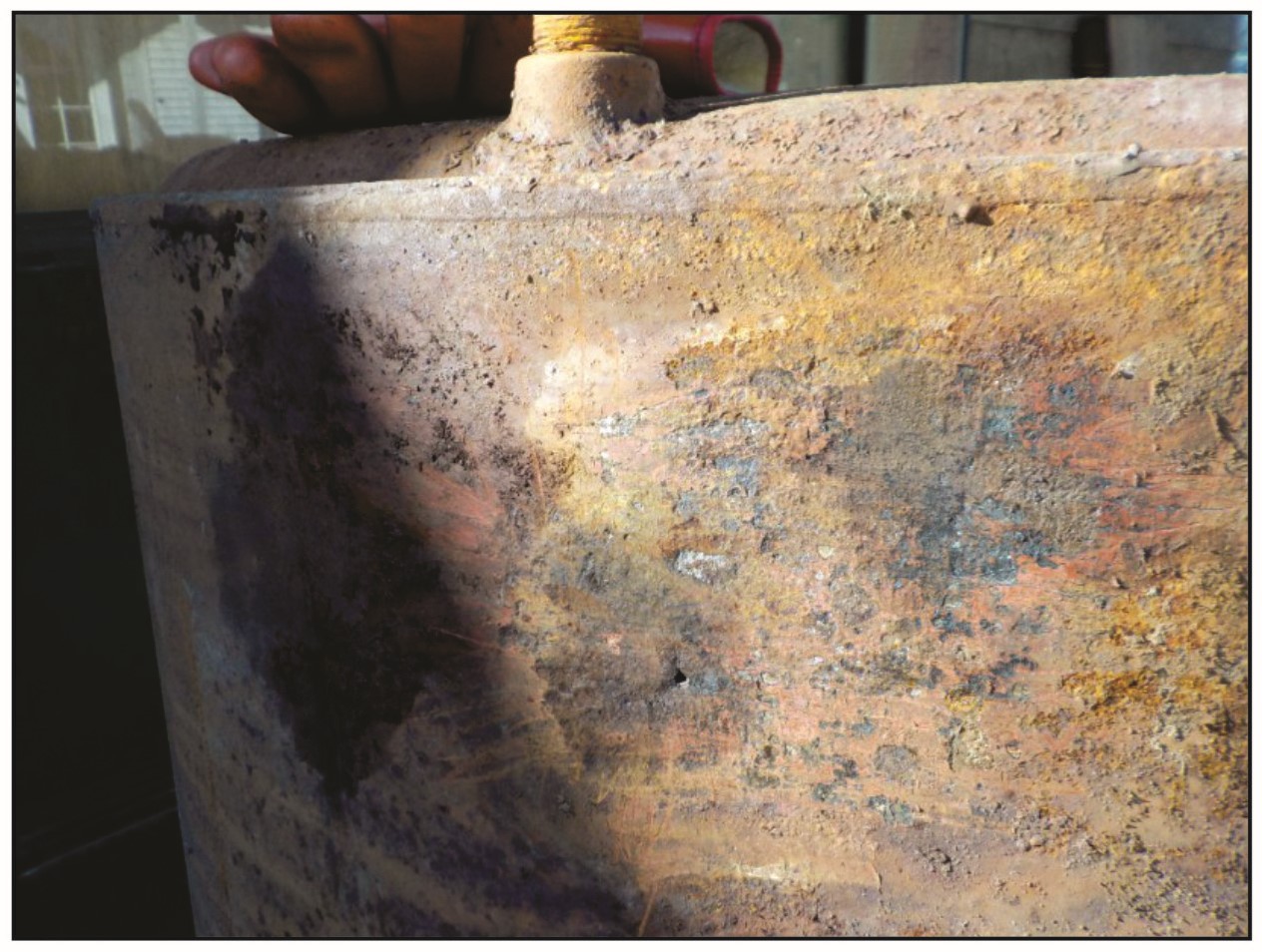
Figure two

Figure 2. This old cylindrical tank (up ended) had three different places dampness indicates seeps. Upon probing the center one, a 1/8" hole appeared in an old dent, which had been temporarily partially plugged with inner sludge, keeping the leaking minimal, but constant. These old tanks should be pumped out and replaced; especially the 55-gallon drums, which don't last long at all.

CONCLUSIONS:

As observed, the minor seepages from fuel oil leaks seem insignificant, but over time they can be wasteful and costly, causing a fuel smell in the area. It is a good idea to do what we can to encourage homeowners to fix these and make Toyo installations as safe and clean as possible.


People Also Ask:

Q. What is a Roth double-wall oil tank best for in cold climates like Alaska?

A. A Roth double-wall oil tank is best for safely storing heating fuel in cold, rural, and remote environments where leak prevention and long-term reliability are critical. Double-wall tanks are designed with an inner tank that holds fuel and an outer containment layer that provides secondary protection. This added safety margin is especially important in extreme climates where steel tanks can corrode or where expansion and contraction stress fittings over time. For rural homeowners and facility managers in Alaska and the northern U.S., this design reduces environmental risk, improves code compliance, and provides peace of mind when service access may be limited during winter.

Q. Who should consider replacing a seeping oil tank with a modern Roth oil storage system?

A. Homeowners, cabin owners, commercial facilities, and marine or remote operations experiencing corrosion, damp spots, or fuel odors should consider upgrading to a modern double-wall oil tank. A seeping tank often signals internal corrosion or compromised fittings. In remote areas, even a small leak can create soil contamination, fire hazards, or unexpected heating failure. Replacing aging single-wall steel tanks with high-efficiency, corrosion-resistant systems reduces long-term risk. For institutional buyers or contractors, modern containment systems also simplify insurance approval and meet stricter environmental standards.

Q. Can a modern oil tank system handle extreme temperature swings and remote installations?

A. Yes, modern double-wall and polyethylene-lined oil tanks are engineered to handle extreme cold, temperature fluctuation, and limited-service locations. Cold climates cause metal expansion and contraction, which stresses seams and fittings. Modern oil tank systems are designed to resist corrosion and reduce structural fatigue, making them suitable for cabins, work camps, and off-grid homes. For industrial and marine users, durable tank construction also supports vibration resistance and consistent fuel flow during harsh operating conditions.

Q. How durable are modern oil storage tanks compared to older single-wall steel tanks?

A. Modern oil storage tanks are significantly more corrosion-resistant and leak-resistant than traditional single-wall steel tanks. Older tanks commonly fail from internal condensation buildup, rust, and weakened seams. Double-wall tanks add a containment layer that reduces spill risk and allows early leak detection before environmental damage occurs. For rural properties where replacement logistics can be complex, investing in a long-life tank reduces future downtime and emergency response costs.

Q. What warning signs indicate an oil tank may be seeping?

A. Common warning signs include damp spots under the tank, oil odors, visible rust scaling, loose fittings, or unexplained drops in fuel level. In cold climates, tanks may seep at seams or fittings as materials contract. Even minor moisture around valves or supply lines should be inspected promptly. Early detection prevents soil contamination and heating interruptions, which are especially serious in remote communities where emergency repair options may be limited.

Q. Does upgrading an oil tank improve overall heating system safety?

A. Yes, upgrading to a modern containment system significantly improves overall heating system safety. A properly installed double-wall tank reduces the chance of fuel spills, fire risk, and environmental damage. Modern tanks also integrate better with updated oil heating equipment such as Toyotomi Oil Miser systems and direct-vent heaters. For emergency preparedness buyers, a secure fuel storage system ensures dependable winter heat during storms and outages.

Q. Is replacing a seeping oil tank difficult in rural or off-grid locations?

A. Replacement is manageable when planned properly and coordinated with experienced contractors familiar with cold-climate installations. Rural installations often require attention to venting, clearances, fuel line routing, and freeze protection. Modern tanks are designed for more flexible placement and improved code compliance compared to older systems. Contractors benefit from clear installation guidance and available parts support, reducing project delays in remote regions.

Q. What accessories or safety components should be installed with a new oil tank?

A. A new oil tank installation should include proper venting, shut-off valves, fire-safe fittings, and, where required, containment or monitoring systems. High-quality valves, fuel lines, and approved venting components reduce leak risk and support safe fuel delivery. In cold climates, installers may also include insulation or protective enclosures to protect fuel lines. For commercial or institutional properties, monitoring and containment systems add an additional layer of compliance and operational oversight.

Q. How does a Roth double-wall tank compare to a standard steel oil tank from big-box retailers?

A. A Roth double-wall tank provides secondary containment and corrosion resistance that standard single-wall steel tanks typically do not offer. While basic steel tanks may meet minimum code requirements, they are more vulnerable to rust and internal moisture damage over time. Double-wall systems are designed for longer service life and reduced environmental risk. For rural homeowners and contractors prioritizing safety and long-term value, the upgraded containment design offers meaningful advantages in extreme climates.

Q. For rural homeowners and facility managers, when is it time to repair versus replace a seeping oil tank?

A. If seepage is caused by a loose fitting or replaceable valve, repair may be possible; however, corrosion at seams or tank walls typically warrants full replacement. Localized hardware issues can sometimes be corrected safely. Structural rust, soft metal spots, or active wall seepage indicate material failure that cannot be reliably patched. In remote Alaska and northern installations, replacement is often the safer long-term decision, ensuring reliable heat through winter and reducing liability exposure.


Explore Other News Vault Articles:

To top