Toyotomi Annual Maintenance Tips: Ensuring Safety and Efficiency
Toyotomi Annual Maintenance Tips

Why Annual Maintenance is Essential:

  • Safety First: Regular maintenance ensures your Toyotomi unit operates safely, reducing the risk of potential hazards.
  • Efficiency Matters: A well-maintained unit runs more efficiently, saving you money on fuel and extending the life of your heater.
  • Avoid Costly Repairs: Routine checks can catch issues early, preventing expensive repairs down the line.

Benefits of Professional Service:

  • Expertise: Certified technicians have the knowledge and tools to properly maintain your unit.
  • Warranty Protection: Regular professional service helps maintain your warranty coverage.
  • Peace of Mind: Knowing your heater is in top condition gives you confidence during the cold months.

Key Maintenance Steps:

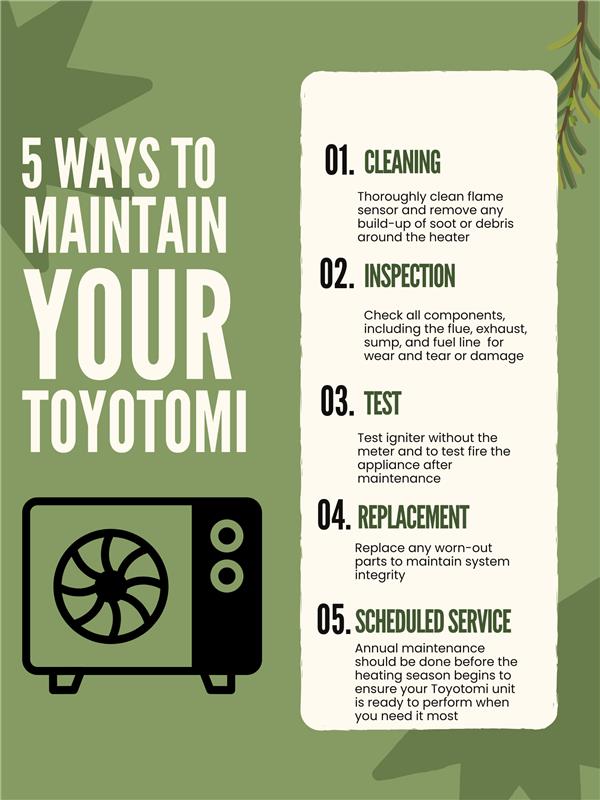
  • Cleaning: Thoroughly clean the flame sensor and remove any buildup of soot or debris around the heater.
  • Inspection: Check all components including the flue, exhaust, sump, and the fuel line for wear and tear or damage.
  • Test: Test igniter without the meter and test fire the appliance after maintenance.
  • Replacement: Replace any worn-out parts to maintain system integrity.

Schedule Your Service:

Annual maintenance should be done before the heating season begins to ensure your Toyotomi unit is ready to perform when you need it most. Contact an authorized service provider for professional maintenance. Contact Us Today to Schedule Your Toyotomi Annual Maintenance!


People Also Ask:

Q. What are Toyotomi Laser Heaters best for in rural or cold-climate homes?

A. Toyotomi Laser heaters are best for reliable, high-efficiency heating in cold, rural, and off-grid environments where dependable performance is essential. These direct-vent, sealed-combustion oil heaters are engineered for extreme climates like Alaska, where sub-zero temperatures and limited service access demand equipment that performs consistently. Their design pulls combustion air from outside, improving safety and maintaining indoor air quality while delivering steady heat output. For rural homeowners and cabin owners, this means consistent warmth, lower fuel consumption compared to older oil stoves, and confidence that the system will operate reliably throughout long winters. Annual maintenance ensures that efficiency and safe operation are preserved year after year.

Q. Who should schedule annual maintenance for a Toyotomi Laser or Oil Miser heater?

A. Anyone relying on a Toyotomi Laser heater or Oil Miser hydronic system as a primary or backup heat source should schedule annual maintenance. In remote homes, seasonal cabins, commercial facilities, and marine or industrial applications, these heaters often operate for extended periods under demanding conditions. Routine service helps prevent unexpected downtime during the coldest months. For contractors and facility managers, annual maintenance also protects long-term equipment life, maintains fuel efficiency, and supports safe operation in installations where heating failure is not an option.

Q. Can a Toyotomi Laser heater continue operating reliably in extreme cold if it’s maintained annually?

A. Yes, annual maintenance significantly improves the likelihood that a Toyotomi Laser heater will perform reliably in extreme cold conditions. Over time, carbon buildup, clogged fuel filters, and restricted airflow can reduce combustion efficiency and lead to ignition issues. Annual cleaning of the burn chamber, inspection of heat exchangers, and replacement of filters help restore proper combustion and fuel flow. In regions where winter temperatures can remain below zero for weeks at a time, preventative service reduces the risk of mid-season breakdowns and helps ensure the heater delivers consistent BTU output when it is needed most.

Q. Is Toyotomi heater maintenance suitable for homeowners, or should it always be handled by professionals?

A. Basic maintenance steps can be handled by experienced homeowners, but a full annual service is best performed by a qualified technician. Homeowners can monitor fuel quality, replace simple filters, and keep vent terminations clear of snow and debris. However, combustion adjustments, burner inspections, and internal cleaning require technical knowledge to ensure safe sealed combustion and optimal efficiency. For off-grid homeowners or those in isolated communities, scheduling professional service before peak winter demand is a practical way to reduce risk and maintain performance.

Q. How does annual maintenance affect the fuel efficiency of a Toyotomi Laser heater?

A. Annual maintenance helps preserve the high fuel efficiency that Toyotomi Laser heaters are designed to deliver. When burners and heat exchangers remain clean and fuel filters are replaced regularly, combustion stays balanced and heat transfer remains efficient. This reduces wasted fuel and supports steady indoor comfort. In cold-climate regions where heating costs represent a significant portion of household expenses, maintaining efficiency directly supports lower operating costs over time.

Q. What results should users expect after servicing a Toyotomi Oil Miser hydronic system?

A. After annual servicing, users should expect more consistent heat delivery, smoother ignition, and improved system reliability. Oil Miser systems rely on clean combustion and proper fuel flow to maintain hydronic performance. Service typically includes inspection of the burner assembly, fuel components, and venting integrity, along with replacement of worn parts as needed. For hydronic applications in homes, schools, or commercial buildings, proper maintenance supports quiet operation, even heat distribution, and dependable hot water supply throughout the heating season.

Q. Does Toyotomi annual maintenance require genuine OEM parts?

A. Using genuine Toyotomi OEM parts is strongly recommended for annual maintenance. OEM components are engineered specifically for Laser and Oil Miser systems, ensuring correct fit, safe combustion characteristics, and manufacturer-aligned performance standards. Substituting non-OEM parts can affect reliability or void warranty coverage. For contractors and facility managers, sourcing parts through an authorized distributor helps maintain system integrity and simplifies future service planning.

Q. What components are typically inspected or replaced during Toyotomi heater maintenance?

A. Typical annual maintenance includes inspection and cleaning of the burner assembly, heat exchanger, fuel filter, fan components, and venting system. Technicians may replace fuel filters, gaskets, or worn ignition components as needed. They also verify that clearances and vent connections meet safety standards. This structured inspection process ensures the heater maintains proper combustion, safe exhaust flow, and stable performance in demanding environments.

Q. Is it safe to delay maintenance on a Toyotomi heater for more than one year?

A. Delaying maintenance increases the risk of reduced efficiency, ignition problems, and unexpected breakdowns. While a Toyotomi heater is built for durability, extended operation without inspection can allow soot buildup, restricted airflow, or degraded fuel components to affect performance. In extreme cold climates, even a short outage can create serious comfort and safety concerns. Annual service is a practical safeguard that protects both the equipment and the people relying on it.

Q. How does maintaining a Toyotomi Laser heater compare to maintaining older non-vented oil heaters?

A. Toyotomi Laser heaters are generally easier to maintain and safer to operate than older non-vented oil heaters, especially when serviced annually. Laser systems use sealed combustion and direct venting, which isolates combustion air from indoor living space. This improves safety and supports cleaner operation. Older non-vented systems may require more frequent cleaning and can affect indoor air quality. For rural and off-grid homeowners upgrading from legacy oil stoves, scheduled maintenance on a modern Laser heater provides better efficiency, improved safety, and more predictable long-term performance.


Explore Other News Vault Articles:

To top