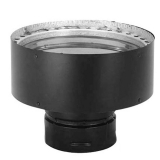
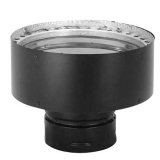
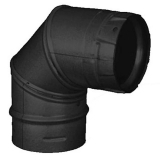
DuraVent Stove Pipe, HVAC, and Venting Equipment

Experience the pinnacle of stovepipe design with DVL's double-wall, air-insulated structure. This innovative design dramatically reduces combustible clearances from 18 inches to a mere 6 inches - the industry's closest wall clearance. By maintaining high flue gas temperatures, DVL ensures a robust and consistent draft, enhancing stove performance.

The stainless steel inner wall ensures rapid heat-up, prolonged heat retention, and significantly reduces creosote formation, aligning its lifespan with that of the chimney. Our adjustable lengths eliminate the need for cutting or crimping, simplifying installation.

Our catalog proudly features double-wall heating solutions from the industry-leading brand, DuraVent. Whether you're seeking a double-wall pipe for flue outlets or a snap-lock adapter for chimney systems, we've got you covered. Trust in our double-wall interior stovepipe for seamless connections between woodstoves, oil stoves, and chimneys, ensuring durability, efficiency, and safety in every installation.

Applications and Installation Solutions:

Applications

Materials and Construction 
.016" stainless steel inner wall. 
.018" galvanized outer, painted black.

Clearances 
6" clearance to walls. 8" clearance to 
ceilings, including cathedral ceilings.

Diameter 
6"

Listings 
c-UL-us listed to ULC S641 (MH14089).
 
People Also Ask:

Q. What is a double wall stove pipe?

A. Double wall stove pipe is connector pipe. It runs from the flue outlet of a wood or oil stove to the ceiling or wall, and it stays inside the room. It is built as two layers of metal with an air space between them, and that air space keeps the outer wall much cooler than a single wall pipe carrying the same flue gases. It is not chimney pipe. Once the flue leaves the room and passes through the building, insulated all-fuel chimney, often called Class A, takes over. Getting that distinction right is the most important decision in a stove pipe purchase, because the two products are not interchangeable in either direction.

Q. What are the benefits of using a double wall stove pipe?

A. The benefits of using a double wall stove pipe include improved safety, increased efficiency, and reduced clearance requirements. The insulated pipe reduces the risk of chimney fires by keeping the outside of the pipe cooler. It also improves the efficiency of the stove by keeping the exhaust gases hotter, which helps to create a stronger draft. Finally, double wall stove pipes typically have reduced clearance requirements, which means they can be installed closer to combustible materials than single wall pipes.

Q. Is double wall stove pipe safe?

A. Yes, double wall stove pipe is designed to be safe and durable when installed and used properly. However, it is important to follow the manufacturer's instructions and to have the chimney inspected and cleaned regularly to ensure proper ventilation and to prevent creosote buildup.

Q. Can double wall stove pipe be used with any type of stove?

A. No, and this catches people out. Double wall stove pipe is connector pipe for solid fuel and oil appliances, so it suits wood stoves, wood inserts and oil drip stoves. It is the wrong product for two common appliances. A pellet appliance needs listed pellet vent, which is a sealed system built for a fan-driven exhaust at lower temperature. A gas appliance needs gas vent or whatever the appliance manufacturer specifies. Always match the venting to the appliance listing rather than to the pipe that happens to fit the collar, because a pipe that physically fits is not the same as a pipe that is approved.

Q. How often does double wall stove pipe need to be cleaned?

A. Double wall stove pipe should be cleaned regularly to prevent creosote buildup and to ensure proper ventilation. The frequency of cleaning will depend on the type of fuel being burned, the amount of use, and other factors. It is recommended to have the chimney inspected and cleaned at least once a year by a qualified professional.

Q. What is the difference between double wall stove pipe and single wall stove pipe?

A. The main difference between Duravent double wall stove pipe and single wall stove pipe is that double wall pipe has two layers of metal separated by an air space, while single wall pipe has only one layer of metal. Double wall pipe is more efficient and safer because it slows heat loss from the flue gases and keeps the outer wall cooler, which reduces the required clearance to combustibles and lowers the risk of a chimney fire.

Q. Can double wall stove pipe be used for outdoor applications?

A. Double wall stove pipe is designed for indoor use only and should not be used for outdoor applications. If an outdoor application is needed, a different type of chimney system specifically designed for outdoor use should be used.

Q. Can double wall stove pipe be painted?

A. Yes, double wall stove pipe can be painted with high-temperature paint. However, it is important to use paint specifically designed for use on stove pipe and to follow the manufacturer's instructions carefully.

Q. What is the lifespan of double wall stove pipe?

A. Properly installed connector pipe on a well-run stove commonly lasts many heating seasons, and what wears it out is corrosion rather than age. The drivers are how acidic the flue gases are, how often the stove is run cool or damped down, whether unseasoned fuel is burned, and whether moisture is allowed to sit in the pipe over the summer. Inspect it each year when the chimney is swept. Replace any section that shows rust holes, pitting, flaking metal, a seam that has opened, or joints that no longer draw tight. Connector pipe is inexpensive relative to the appliance and the building, so replacing a doubtful section is never the wrong call.

Q. How do I clean double wall stove pipe?

A. Double wall stove pipe should be cleaned regularly to remove any buildup of creosote and other debris. A qualified professional can perform a thorough cleaning, or the homeowner can use a chimney brush to clean the inside of the pipe.

Q. What Clearance Does Double Wall Stove Pipe Need to Combustibles?

A. The pipe's own listing states its required clearance, and that figure is printed in the instructions supplied with the pipe. Use it rather than a number remembered from another installation, because clearances differ between products and between single and double wall. Two separate requirements apply at the same time and both must be met: the pipe listing governs the pipe, and the appliance label governs the stove itself. Meeting one does not satisfy the other. Clearance is measured to combustible material, which includes framing and trim behind a finished surface, not just the visible wall. Approved shielding with a ventilated air gap can reduce a required distance, but only by the amount the listing permits and only when built exactly as specified.

Q. How Much Closer to a Wall Can Double Wall Pipe Be Installed Than Single Wall?

A. Substantially closer, and that difference is the main reason to choose it. Because the air space keeps the outer wall cooler, listed double wall connector pipe carries a much smaller required clearance than single wall pipe of the same diameter. In practice that is often what decides whether a stove can go in a tight corner, a small cabin or an alcove at all. Check the exact figures on the two product listings before you commit to a stove position, because the difference varies by manufacturer and diameter. If the room is tight, price the double wall pipe before you conclude the stove will not fit, since the pipe is usually cheaper than moving a wall.

Q. What Diameter Stove Pipe Do I Need?

A. Match the diameter to the appliance's flue outlet, not to the chimney and not to what is in stock. Reducing the diameter restricts the flue and starves the draft, which produces a sluggish, sooty burn and can push smoke back into the room. Increasing it cools the flue gases, which slows the draft and accelerates creosote. Six inch and eight inch cover most wood stoves, but the appliance manual is the authority for your model. If your connector diameter does not match the chimney it enters, the correct fix is a listed adapter at the transition rather than an improvised joint. Where a stove has been fitted to an oversized existing masonry chimney, a liner sized to the appliance is usually the answer.

Q. Where Does Stove Pipe Stop and Chimney Begin?

A. At the room boundary. Connector pipe, single or double wall, runs from the stove outlet up to the ceiling or across to the wall and stops there. From that point on, everything that passes through the building and continues above the roof must be insulated all-fuel chimney, joined at the transition with the listed support box or wall thimble made for it. The two are engineered for different conditions and are not substitutes. If you are pricing a complete installation, budget for both, because a common surprise is buying only the connector pipe and discovering at the ceiling that the expensive part of the system has not been ordered yet.

Q. Can Stove Pipe Pass Through a Wall, Ceiling or Attic?

A. No. Connector pipe of either type must never pass through a wall, a ceiling, a floor, an attic or any concealed space, and this is one of the most dangerous shortcuts taken in a home installation. Concealed pipe cannot be inspected, cannot be swept properly, and sits close to framing you cannot see, which is precisely how chimney fires spread into a structure. Any penetration must be made with the listed component for the job, a wall thimble or a ceiling support box, transitioning to all-fuel chimney at that point. If an existing installation runs connector pipe into a wall or ceiling, treat it as a fault to correct before the next heating season rather than a quirk to live with.

Q. Which End of the Pipe Points Toward the Stove?

A. Assemble connector pipe so that each section fits inside the one below it, which means the crimped or male end points down toward the stove. Done that way, any condensate or creosote that forms on the inside runs back down into the appliance instead of leaking out of a joint and staining the wall or floor. Getting it upside down is the most common assembly mistake and shows up as brown streaks at the seams within a season. Double wall products often use a locking or twist-lock joint with a marked orientation, so follow the printed instructions for the specific system, and secure joints with the fasteners the manufacturer specifies rather than relying on friction alone.

Q. Can I Mix Stove Pipe Brands in One Installation?

A. Best practice is to keep one manufacturer's system throughout. Double wall connector pipe and all-fuel chimney are listed and tested as complete systems, including the joints, the supports and the transition components, and a listing does not carry over to another brand's parts. Diameters that appear identical can differ in the locking detail, the wall spacing or the joint depth, so parts that seem to fit may not seal or lock as designed. Mixing brands can also complicate an insurance or inspection question later, since the installation no longer matches any single set of instructions. If you are extending or repairing an existing run, identify the brand first and order matching sections.

Q. Is Double Wall Pipe Worth the Extra Cost Over Single Wall?

A. It depends on the room. If the stove sits in a space where the required clearance is easy to achieve, single wall pipe is cheaper and radiates a little extra heat into the room, which some people prefer. Double wall earns its price where the room is tight, where the clearance cannot otherwise be met, or where the flue needs to stay hot to draft well, which is a real consideration in an Alaska winter with a cold chimney and a long heating season. Since it is often the difference between an installation being possible and not, price it as part of the whole system before deciding, rather than comparing the pipe alone.

276 Results

Per Page
To top