Benefits of Wood Burning Stoves: Eco-Friendly Heating
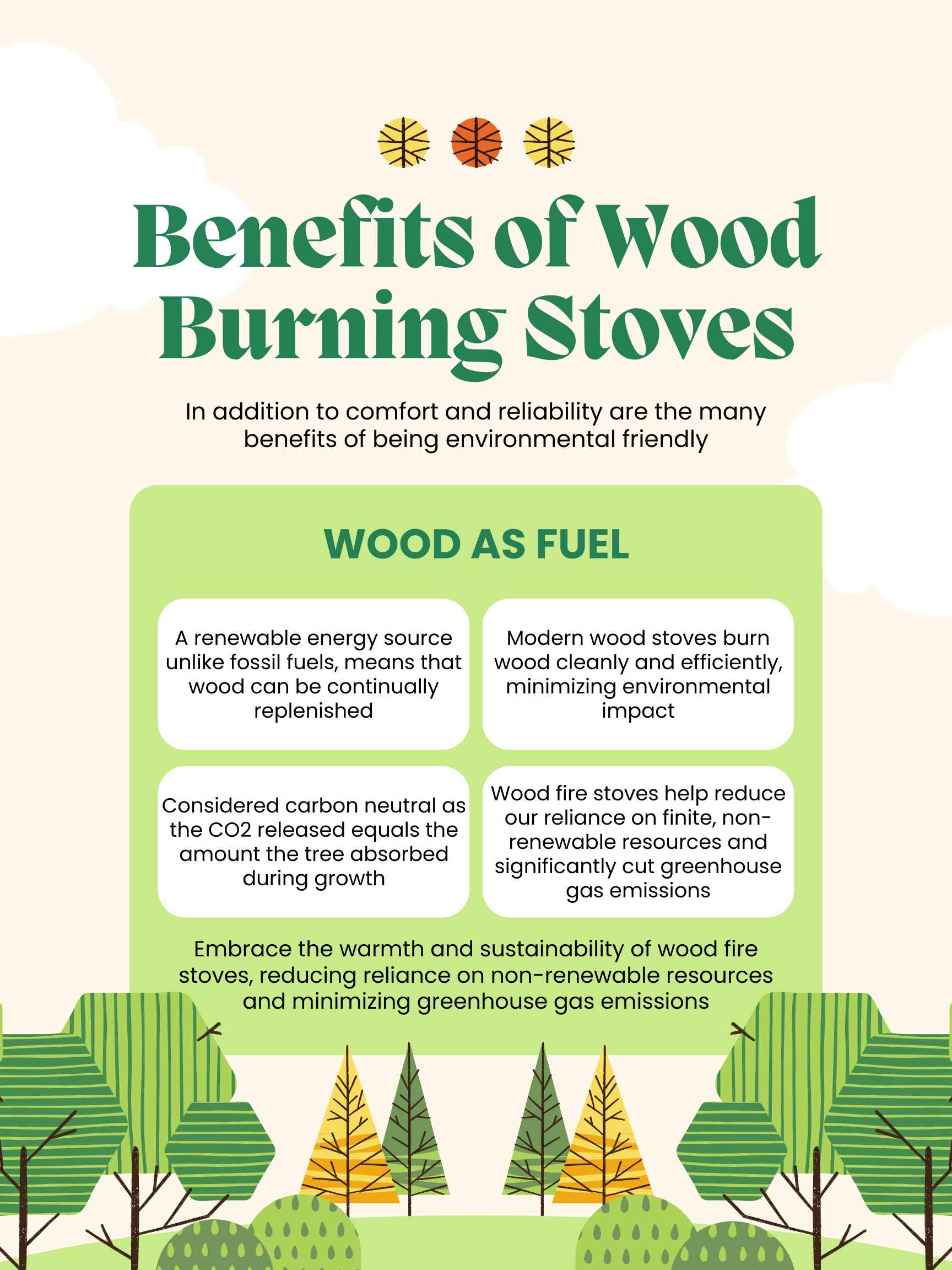
Benefits of Wood Burning Stoves

Wood burning stoves have been a traditional heating solution for centuries, and they continue to be a popular choice for many homeowners today. Apart from their cozy ambiance and charming appeal, wood fire stoves offer a range of benefits, particularly in terms of environmental sustainability and cost savings. In this information piece, we'll delve into the environmental and cost-saving benefits of using wood fire stoves for heating.

Environmental Benefits:

Renewable Energy Source:Wood is a renewable energy source, unlike fossil fuels such as coal, oil, and natural gas. This means that as long as forests are managed sustainably, wood can be continually replenished.

Low Carbon Footprint: When burned efficiently, wood produces lower carbon emissions compared to fossil fuels. Modern wood stoves are designed to burn wood cleanly and efficiently, minimizing their environmental impact.

Carbon Neutral:Wood is considered carbon neutral because the carbon dioxide released during combustion is roughly equal to the amount that the tree absorbed during its growth. This cycle makes wood a more sustainable heating option compared to fossil fuels.

Reduced Dependence on Non-Renewable Resources:Using wood burning stoves reduces our reliance on non-renewable resources such as coal, oil, and natural gas, which are finite and contribute significantly to greenhouse gas emissions.

Cost-Saving Benefits:

Lower Heating Costs:: Wood is often more affordable than other heating fuels, making wood burning stoves a cost-effective heating solution. In many cases, homeowners can save significantly on their heating bills by using wood burning stoves.

Energy Independence: By using wood as a heating source, homeowners can reduce their dependence on external sources of energy, such as electricity or gas. This can provide a sense of security, especially during times of energy price fluctuations.

Local Availability: Wood is often sourced locally, which reduces transportation costs and supports local economies. This can further contribute to cost savings for homeowners.

Long-Term Savings: Investing in a high-quality wood fire stove can lead to long-term savings, as these stoves are durable and can last for many years with proper maintenance. Additionally, wood burning stoves can increase the value of a home, making them a worthwhile investment.

Wood burning stoves offer a range of environmental and cost-saving benefits, making them an attractive heating option for homeowners. By choosing to heat their homes with wood, homeowners can reduce their carbon footprint, save money on heating costs, and enjoy the cozy warmth of a wood burning stove.


People Also Ask:

Q. What are wood burning stoves best for in rural and cold-climate homes?

A. Wood burning stoves are best for dependable, non-electric zone heating in rural, off-grid, and extreme cold environments. In remote homes and cabins, reliable heat is not optional. A properly sized EPA-certified wood stove provides steady warmth without relying on grid electricity, making it a practical primary or backup heat source during outages. Modern wood stoves are engineered for efficient combustion, longer burn times, and reduced emissions. When installed with proper venting and clearances, they deliver safe, consistent performance in harsh climates where equipment must perform flawlessly.

Q. Who should consider installing a wood burning stove?

A. Wood burning stoves are ideal for rural homeowners, off-grid residents, cabin owners, and anyone who needs reliable heat independent of electricity. For full-time rural households, wood heat can reduce reliance on delivered fuels and provide cost stability when firewood is locally sourced. For seasonal cabins and recreational properties, a wood stove offers fast heat-up and dependable operation after periods of vacancy. Institutions and remote work sites also use wood stoves for zone heating in workshops or secondary buildings where simplicity and durability matter.

Q. Can a wood burning stove heat an entire home in extreme cold?

A. Yes, a properly sized wood stove can heat an entire small-to-mid-size home or serve as a primary heat source when strategically located. High-efficiency models are rated for specific square footage and BTU output. When placed centrally and paired with appropriate venting systems, they can distribute heat effectively throughout open-layout homes. In very large homes, many customers use one or two stoves for zone heating to reduce load on oil, gas, or hydronic systems while maintaining comfort during sub-zero conditions.

Q. Are modern EPA-certified wood stoves efficient?

A. Yes, EPA-certified wood stoves burn significantly cleaner and more efficiently than older non-certified models. Advanced combustion systems reburn smoke and gases before they exit the flue, extracting more usable heat from every piece of firewood. This reduces emissions, improves heat output, and extends burn time. The result is lower wood consumption, less creosote buildup, and improved safety when paired with properly installed chimney systems.

Q. How reliable are wood stoves during power outages?

A. Wood burning stoves are highly reliable during power outages because they operate without electricity. In rural and remote regions, winter storms can interrupt grid service. A freestanding wood stove continues operating as long as dry firewood is available. This makes wood heat an important resilience strategy for emergency preparedness buyers and off-grid households who need heat that does not depend on blowers, circuit boards, or external fuel deliveries.

Q. What type of properties benefit most from wood heating?

A. Cabins, rural homes, seasonal properties, workshops, and remote outbuildings benefit most from wood heating. Wood stoves are especially effective in properties where fuel deliveries are expensive or inconsistent. In hunting lodges or recreational cabins, they provide strong radiant heat and a practical, durable solution that tolerates intermittent use. For homeowners focused on energy independence, wood heat supports a self-reliant lifestyle aligned with long-term cost control and resilience.

Q. What should homeowners expect in terms of maintenance?

A. Homeowners should expect regular ash removal, chimney inspection, and annual cleaning to maintain safe and efficient operation. Routine maintenance is straightforward but essential. Chimney systems must be inspected for creosote buildup, and gaskets and seals should remain intact to maintain proper draft. With proper care, high-quality wood stoves deliver years of reliable service, especially when installed with certified venting components.

Q. How do wood burning stoves compare to oil or gas heating systems?

A. Wood stoves offer energy independence and fuel flexibility, while oil and gas systems provide automated, thermostat-controlled operation. Oil and gas systems are convenient and can reach high efficiency ratings, but they depend on fuel supply chains and often electricity. Wood heat gives homeowners direct control over fuel sourcing and provides dependable backup during outages. Many rural properties use a hybrid approach for balanced comfort and cost control.

Q. Are wood stoves suitable for eco-conscious homeowners?

A. Yes, EPA-certified wood stoves are a practical option for eco-conscious homeowners when properly operated. Wood is a renewable fuel when responsibly harvested. Modern combustion technology reduces particulate emissions compared to older stoves. For customers seeking to reduce fossil fuel dependence while maintaining reliable heat, wood stoves provide a balanced solution grounded in real-world performance.

Q. What should buyers consider before choosing a wood burning stove?

A. Buyers should consider square footage, insulation level, chimney configuration, local codes, and long-term fuel availability. Correct sizing is critical. An undersized stove may struggle in extreme cold, while an oversized unit can overheat smaller spaces. Venting system compatibility and clearance requirements must meet safety codes and manufacturer specifications. Working with a knowledgeable distributor ensures proper product selection and long-term parts support, especially important in rural and remote installations.


Explore Other News Vault Articles:

To top