Best Types of Wood for Wood Stoves: Efficient Burning
Best Types of Wood for Wood Stoves

Wood selection is crucial when it comes to using a wood fire stove efficiently and effectively. Not all wood is created equal, and choosing the right type of wood can significantly impact the performance of your stove. Let’s outline the best types of wood to use in wood fire stoves, as well as provide tips on seasoning and storing wood for optimal performance.

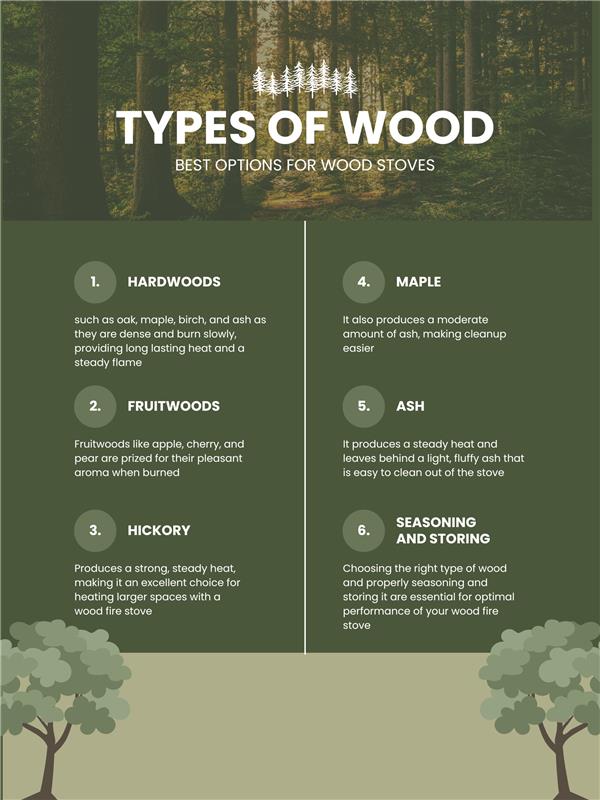
Hardwoods:Hardwoods such as oak, maple, birch, and ash are ideal for wood fire stoves. They are dense and burn slowly, providing long-lasting heat and a steady flame. Hardwoods also tend to produce less creosote buildup in chimneys compared to softwoods.

Fruitwoods: Fruitwoods like apple, cherry, and pear are prized for their pleasant aroma when burned. They also burn cleanly and produce a steady heat, making them a popular choice for wood fire stoves.

Hickory:Hickory is known for its high energy content and long burn times. It produces a strong, steady heat, making it an excellent choice for heating larger spaces with a wood fire stove.

Maple:Maple wood burns hot and produces a steady flame. It also produces a moderate amount of ash, making cleanup easier.

Ash:Ash wood burns well even when green (freshly cut). It produces a steady heat and leaves behind a light, fluffy ash that is easy to clean out of the stove.

Seasoning and Storing Wood:

Seasoning: Seasoning wood involves allowing it to dry out properly before burning. This process usually takes at least six months to a year, depending on the type of wood and the climate. Seasoned wood burns more efficiently, producing more heat and less smoke.

Splitting: Splitting wood into smaller pieces helps it dry out more quickly and evenly. It also makes it easier to handle and stack.

Storing: Store seasoned wood in a dry, well-ventilated area, such as a woodshed or covered woodpile. Keep the wood off the ground to prevent it from absorbing moisture.

Avoid Green Wood: Green (unseasoned) wood contains a high moisture content, which can lead to poor burning efficiency, increased creosote buildup, and more frequent cleaning of the stove and chimney.

Choosing the right type of wood and properly seasoning and storing it are essential for optimal performance of your wood fire stove. By selecting hardwoods and fruitwoods, and following proper seasoning and storage practices, you can ensure that your wood fire stove operates efficiently and provides you with a cozy, warm fire all winter long.


People Also Ask:

Q. What is an Osburn wood stove best for when choosing firewood?

A. Seasoned hardwood such as birch, oak, maple, or ash is best for an Osburn wood stove because it burns hotter, longer, and more efficiently. Osburn wood stoves are designed for high-efficiency combustion and steady heat output, especially in cold climates. Dense hardwoods provide consistent BTU output and longer burn cycles, which support the stove’s engineered airflow and secondary burn systems. In rural and off-grid homes where reliability matters, hardwood reduces the need for frequent reloading and helps maintain stable indoor temperatures during long winter nights.

Q. Who should prioritize high-density hardwood in a Drolet or Valcourt wood stove?

A. Rural homeowners, cabin owners, and anyone heating full-time through winter should prioritize high-density hardwood in a Drolet or Valcourt wood stove. Hardwoods like birch and oak contain more stored energy per cord, which means more usable heat and longer burn times. That matters in remote areas where fuel delivery is limited and every cord must perform efficiently. For households relying on wood as a primary heat source, hardwood supports safer operation, reduced creosote buildup, and improved long-term chimney performance.

Q. Can softwoods like spruce or pine be used in an EPA-certified wood stove?

A. Yes, softwoods such as spruce and pine can be used in an EPA-certified wood stove, especially for kindling or shoulder-season heating. Softwoods ignite quickly and produce fast heat, making them useful for starting fires or warming a space during milder weather. However, they burn faster and require more frequent loading compared to hardwoods. In extreme cold conditions, softwood alone may not deliver sustained heat overnight, so it is best used alongside seasoned hardwood for balanced performance.

Q. Is hardwood necessary for off-grid cabins in Alaska and similar cold climates?

A. Hardwood is strongly recommended for off-grid cabins in Alaska and similar cold climates because it provides longer, steadier heat output. In remote locations where temperatures can drop well below zero, consistent overnight burn times are critical. Dense hardwood reduces reload frequency and helps maintain interior comfort without constant supervision. For properties without backup electric heat, choosing properly seasoned hardwood supports safer and more dependable heating performance.

Q. How does seasoned wood improve the performance of a wood stove?

A. Seasoned wood improves wood stove performance by burning hotter, cleaner, and more efficiently. Firewood should have a moisture content below 20 percent. When wood is properly seasoned, less energy is wasted evaporating water, which increases usable heat output and reduces smoke. This cleaner burn supports secondary combustion systems in modern stoves from brands like Osburn, Drolet, and Valcourt, improving efficiency and reducing chimney creosote buildup.

Q. What results should homeowners expect from burning properly seasoned hardwood?

A. Homeowners should expect stronger heat output, longer burn times, and less chimney maintenance when burning properly seasoned hardwood. Hardwood provides steady, high-BTU heat that maintains room temperature longer between loads. It also produces fewer unburned particles, which reduces soot and creosote formation inside the venting system. Over time, this contributes to safer operation, lower maintenance costs, and better overall fuel efficiency.

Q. Does the type of wood affect chimney and stove pipe performance?

A. Yes, the type and moisture level of wood directly affect chimney and stove pipe performance. Wet or unseasoned wood produces excess smoke and creosote, increasing buildup inside black pipe, double-wall pipe, and chimney systems. This can reduce draft efficiency and increase fire risk. Using properly seasoned hardwood supports stable draft, cleaner venting, and safer long-term operation, especially in installations with tight clearances or long chimney runs.

Q. What moisture level should firewood have for modern wood stoves?

A. Firewood should have a moisture content of 20 percent or lower for modern wood stoves. At this level, combustion is efficient and predictable. Higher moisture content reduces heat output and increases smoke production. In cold-climate regions where heating is essential, investing in properly seasoned wood or allowing sufficient drying time helps protect both the stove and the venting system.

Q. Is birch a good firewood choice for rural homes?

A. Birch is an excellent firewood choice for rural homes because it burns hot and produces steady heat when properly seasoned. It is widely available in northern regions and offers a strong balance between ignition ease and sustained burn time. When split and dried correctly, birch supports clean combustion in EPA-certified wood stoves. For many Alaska and northern homeowners, birch is a dependable primary fuel that supports practical, reliable heating.

Q. Should homeowners choose hardwood or softwood if they want to reduce heating costs?

A. Homeowners looking to reduce heating costs should primarily choose seasoned hardwood. Because hardwood contains more energy per cord, fewer loads are required to maintain comfort. This improves efficiency and reduces overall wood consumption across a heating season. In rural and off-grid settings where fuel sourcing requires time and labor, maximizing BTU output per load is a practical way to lower operating effort and long-term heating expense.


Explore Other News Vault Articles:

To top