Bosch Maintenance Checklist: Daily to Annual Tasks
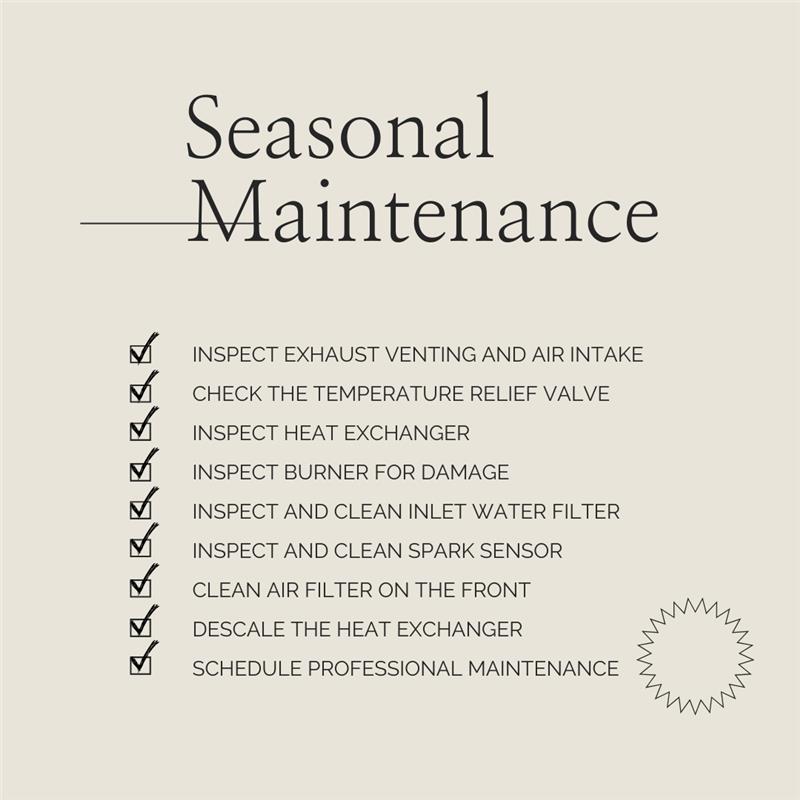
Daily to Annual Maintenance Checklist

Regular maintenance is essential to ensure the optimal performance and longevity of your Bosch water heater. By following a seasonal maintenance checklist, you can help prevent issues and ensure that your water heater operates efficiently throughout the year. Here's a comprehensive checklist to guide you through the seasonal maintenance of your Bosch water heater:

Daily (by owner)
  • Ensure that no water leaks are evident around the outside of the water heater, the pressure relief valve, or from the installer-supplied plumbing connections.
  • Inspect the air intake and exhaust terminations on the exterior of the home, and ensure they are unobstructed by snow, ice, shrubs, or any other material.
  • Visually inspect the exterior of the water heater and the vent piping for signs of discoloration or physical damage.
  • If any water leaks, discoloration, or physical damage are found during visual inspection, please shut off the power, gas, and water supplies to the water heater and contact your installer or a qualified service person immediately. Do not attempt to remove the front cover yourself!
Every 400 Operation Hours Or 25,000 Cycles (qualified service person)
  • Inspect and clean the inlet water filter.
  • Inspect the heat exchanger for soot, water leaks, or compromised seals.
  • Descale the heat exchanger (especially in areas with high mineral content in the water).
Annually (qualified service person)
  • Inspect exhaust venting and air intake piping for blockages or damage.
  • Inspect the heat exchanger for soot, water leaks, or compromised seals.
  • Inspect the burner for damage or blockages.
  • Inspect the pressure relief valve for leaks and test for correct operation.
  • Inspect and clean the inlet water filter.
  • Inspect the condensate trap for leaks, blockages, or damage.
  • Check and clean the spark/flame sensor electrodes.
  • Inspect and clean the air filter that is mounted on the front of the fan.
  • Descale the heat exchanger (especially in areas with high mineral content in the water).

By following this seasonal maintenance checklist, you can help prolong the life of your Bosch water heater and ensure that it continues to provide reliable hot water for your home. Regular maintenance can also help you identify and address potential issues early, saving you time and money in the long run.


People Also Ask:

Q. What is Bosch high-efficiency heating and water heating equipment best for in rural and cold climates?

A. Bosch high-efficiency heating and water heating systems are best for delivering reliable, energy-efficient performance in homes and facilities that demand consistent heat and hot water in cold and remote environments. Bosch boilers and tankless water heaters are engineered for sealed combustion, advanced heat exchangers, and precise temperature control to support steady performance while reducing fuel consumption. In rural and extreme climates, following a structured daily-to-annual maintenance checklist helps preserve efficiency, extend equipment life, and prevent mid-winter breakdowns.

Q. Who should follow the Bosch daily to annual maintenance checklist?

A. Homeowners, HVAC contractors, facility managers, and maintenance teams responsible for Bosch boilers or tankless water heaters should follow the checklist. Routine inspection protects burners, venting, sensors, and heat exchangers while reducing the risk of downtime during peak heating demand. In remote cabins, schools, clinics, and work camps, documented maintenance supports safety, compliance, and long-term reliability.

Q. Can Bosch heating systems handle extreme cold and continuous winter operation?

A. Yes, Bosch heating systems are designed for high-efficiency operation and can perform reliably in cold climates when properly installed and maintained. Sealed venting and advanced combustion systems protect internal components during extended runtime. In regions with long winters, annual inspection and heat-exchanger cleaning are essential to maintain stable output and dependable hot water delivery.

Q. Is the Bosch maintenance checklist suitable for both homeowners and professional technicians?

A. Yes, the checklist allows homeowners to complete basic visual and cleaning tasks while licensed technicians handle annual service procedures. Monthly checks may include inspecting vent terminations and checking for visible leaks. Annual service such as combustion analysis, descaling heat exchangers, and verifying gas pressures should be performed by qualified professionals to ensure safety and code compliance.

Q. How does regular maintenance affect the performance of Bosch tankless water heaters and boilers?

A. Regular maintenance preserves efficiency, stabilizes output, and protects internal components from premature wear. Tankless systems can accumulate scale in hard-water environments, and flushing restores proper heat transfer. Boiler inspections that include burner cleaning and vent verification help ensure consistent BTU output and reliable operation through the heating season.

Q. What results should users expect from following a daily to annual Bosch maintenance plan?

A. Users should expect improved reliability, stable heating performance, and longer equipment life. Preventive care reduces the likelihood of emergency shutdowns or ignition failures during peak winter conditions. Consistent maintenance also supports sustained energy efficiency and more predictable operating costs over time.

Q. Does the Bosch maintenance checklist apply to both tankless water heaters and hydronic boilers?

A. Yes, the maintenance framework applies to both Bosch tankless water heaters and hydronic boiler systems, with model-specific adjustments. Tankless units require inspection of inlet screens, venting, and scale buildup, while hydronic systems require circulation, pressure, and combustion checks. The core principle remains inspection, cleaning, verification, and documentation.

Q. What system components should be inspected during annual Bosch service?

A. Annual service should include inspection of heat exchangers, burners, ignition systems, venting connections, condensate drains, and safety sensors. Technicians should verify gas pressure, combustion quality, and control board operation. In hydronic systems, pumps, valves, and pressure levels must also be evaluated to ensure safe and efficient operation.

Q. Is Bosch equipment easy to maintain in remote or off-grid locations?

A. Yes, Bosch systems are designed for serviceability, but preventive scheduling is especially important in remote or off-grid settings. Accessible service panels and diagnostic displays support efficient troubleshooting. Keeping recommended spare parts and approved cleaning solutions on hand helps maintain uninterrupted operation where emergency service access may be limited.

Q. How does Bosch maintenance compare to other high-efficiency heating brands?

A. Bosch maintenance requirements are comparable to other premium high-efficiency heating brands, with similar emphasis on annual inspection and scale prevention. Modern sealed-combustion and condensing systems all require routine cleaning and verification to maintain efficiency and protect heat exchangers. Consistent maintenance discipline is the key factor in long-term reliability and performance.


Explore Other News Vault Articles:

To top