Gas vs Electric Water Heaters: A Comprehensive Cost Comparison
Comparing Costs: Gas Vs Electric

Choosing the right water heater for your home involves considering various factors, including energy costs. Electric water heaters are a popular choice, but how do they compare to other energy sources in terms of operating costs? Let’s compare the energy costs of electric water heaters with those of gas and propane water heaters to help you make an informed decision.

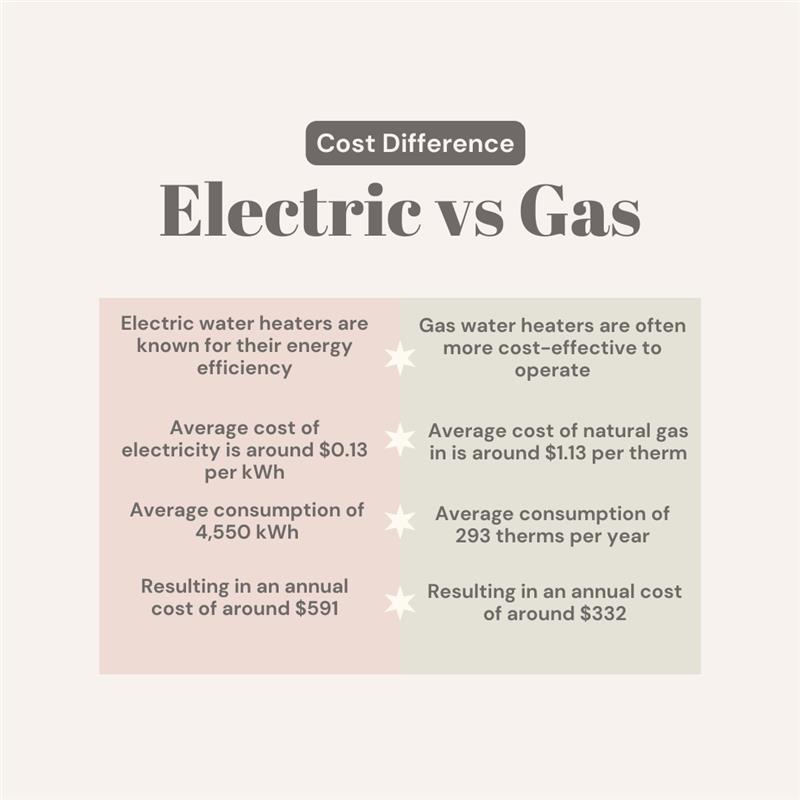
  • Electric Water Heaters:Electric water heaters are known for their energy efficiency, but they can be more expensive to operate compared to gas and propane water heaters. The average cost of electricity in the United States is around $0.13 per kilowatt-hour (kWh). A typical electric water heater with a capacity of 50 gallons and an energy factor of 0.95 (which is considered high efficiency) will consume approximately 4,550 kWh per year, resulting in an annual cost of around $591.
  • Gas Water Heaters:Gas water heaters are often more cost-effective to operate compared to electric water heaters, especially in areas where natural gas is readily available. The average cost of natural gas in the United States is around $1.13 per therm (a unit of heat energy). A typical gas water heater with a capacity of 50 gallons and an energy factor of 0.62 (which is common for gas water heaters) will consume approximately 293 therms per year, resulting in an annual cost of around $332.
  • Propane Water Heaters:Propane water heaters are like gas water heaters in terms of operating costs, but propane prices can vary depending on location and season. The average cost of propane in the United States is around $2.50 per gallon. A typical propane water heater with a capacity of 50 gallons and an energy factor of 0.62 will consume approximately 190 gallons per year, resulting in an annual cost of around $475.

Comparing the annual operating costs of these three types of water heaters, we can see that gas water heaters are the most cost-effective, followed by electric water heaters and then propane water heaters. However, it's important to note that the actual operating costs can vary based on factors such as local energy prices, water usage habits, and the efficiency of the water heater.

In conclusion, when choosing a water heater for your home, it's important to consider not only the upfront cost but also the long-term operating costs. While electric water heaters are energy efficient, they may be more expensive to operate compared to gas and propane water heaters. Understanding the comparative energy costs can help you make an informed decision that suits your budget and energy needs.


People Also Ask:

Q. What is a high-efficiency gas heating system best for in cold climates like Alaska?

A. High-efficiency gas heating systems are best for delivering consistent, lower-cost heat in very cold climates where fuel efficiency directly impacts monthly operating costs. In regions with long winters and sub-zero temperatures, fuel cost per BTU becomes a critical factor. Natural gas and propane systems—such as direct-vent wall furnaces and high-efficiency boilers—often deliver more heat per dollar compared to standard electric resistance heating. Modern sealed-combustion systems are engineered for safe indoor operation and dependable performance when heating must perform without compromise.

Q. Who should consider electric heating instead of gas?

A. Electric heating is well suited for smaller homes, well-insulated buildings, and properties where gas supply is unavailable or impractical. Electric systems are typically simpler to install because they do not require venting or fuel storage. For cabins, seasonal properties, or tightly sealed modern homes, electric baseboard heaters or heat pump systems can provide clean, low-maintenance operation while reducing mechanical complexity.

Q. Can gas heating handle extreme cold better than electric systems?

A. In very cold climates, gas heating systems typically maintain output more reliably than standard electric resistance heaters and some air-source heat pumps. Gas systems generate high BTU output regardless of outdoor temperature. This makes them a strong fit for larger rural homes, commercial buildings, schools, and remote facilities where sustained heating capacity is essential for safety and comfort.

Q. Is electric heating suitable for off-grid or backup scenarios?

A. Electric heating can work in off-grid systems, but only when supported by adequate generation and battery capacity. Electric resistance heaters require substantial power draw, which can exceed small solar or generator setups. In many remote scenarios, fuel-based systems provide greater resilience, while electric heat may serve as supplemental or hybrid support.

Q. Is gas heating cheaper to operate than electric heating?

A. In many cold-climate regions, gas heating is less expensive to operate per BTU than electric resistance heating. Operating cost depends on local fuel and electricity rates, system efficiency, and total heating demand. High-efficiency gas furnaces and boilers often provide lower monthly heating bills where natural gas or propane pricing is competitive.

Q. What long-term costs should homeowners compare beyond monthly utility bills?

A. Homeowners should compare installation cost, maintenance requirements, equipment lifespan, and fuel price stability. Gas systems typically require venting and combustion components, while electric systems often have fewer moving parts. Evaluating total lifecycle cost—including service access and long-term reliability—provides a clearer financial picture than monthly bills alone.

Q. Does gas heating require special infrastructure?

A. Yes. Gas heating requires access to a fuel source, proper venting, and safe combustion design. Homes must have natural gas service or propane storage, and direct-vent systems must meet clearance and code requirements. While this adds upfront cost, it supports dependable heating performance in demanding winter conditions.

Q. Is electric heating easier to install?

A. Electric heating systems are generally simpler and faster to install than gas systems because they do not require venting or fuel lines. This makes them attractive for remodels, additions, or buildings without existing gas infrastructure. Electrical panel capacity should still be evaluated to ensure it can handle heating loads safely.

Q. How does gas heating compare to electric heat pumps in overall efficiency?

A. Gas furnaces can reach efficiency ratings in the high 90% range, while electric heat pumps can exceed 100% effective efficiency under moderate conditions. Heat pumps move heat rather than generate it, but performance may decline in extreme cold without supplemental heat. Gas systems provide consistent combustion-based heat regardless of outdoor temperature, which can be critical in northern climates.

Q. For rural and off-grid homeowners, which heating option offers greater long-term reliability?

A. For many rural and off-grid homeowners, fuel-based heating systems often provide greater long-term reliability in harsh winter conditions. During power outages, certain gas or non-electric systems can continue operating, supporting safety and property protection. The right choice depends on fuel availability, grid stability, insulation levels, and building size to ensure dependable warmth year after year.


Explore Other News Vault Articles:

To top