Direct Vent vs Vent Free Heaters: A Comprehensive Comparison for Home Heating
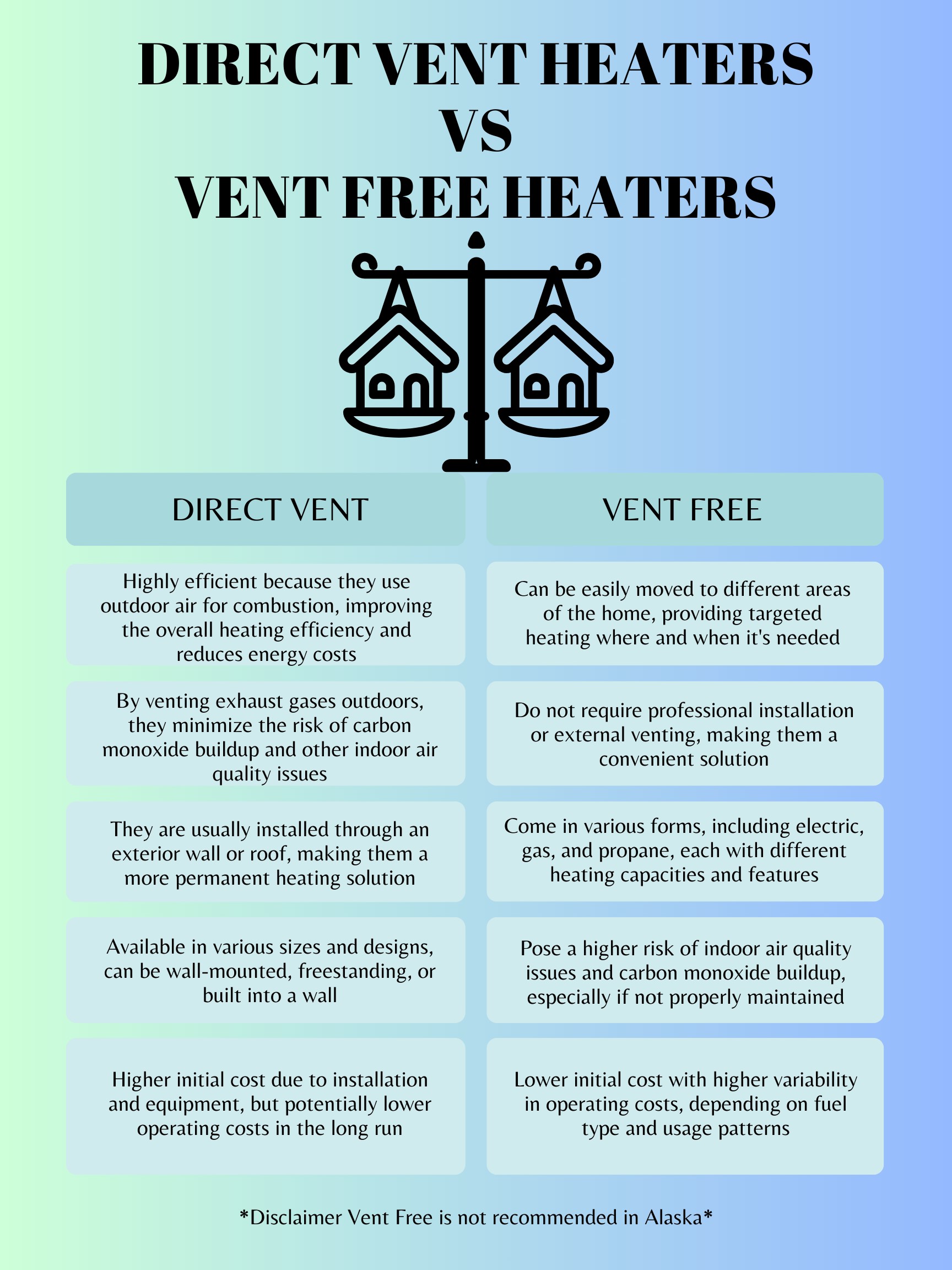
Direct Vent Vs Vent Free Heaters.

When it comes to home heating, choosing the right type of heater can significantly impact your comfort, energy efficiency, and safety. Two popular options are direct vent heaters and vent free heaters. Each type has its unique advantages and disadvantages, making it essential to understand their differences before deciding which one is best suited for your needs.

What Are Direct Vent Heaters?

Direct vent heaters are heating systems designed to draw combustion air from outside the home and expel exhaust gases back outdoors. This sealed combustion process ensures that the indoor air quality remains unaffected by the heating process.

Key Features of Direct Vent Heaters:

Efficiency: Direct vent heaters are highly efficient because they use outdoor air for combustion, which improves overall heating efficiency and reduces energy costs.

Safety: Since these heaters draw air from outside and vent exhaust gases outdoors, they minimize the risk of carbon monoxide buildup and other indoor air quality issues.

Installation: Direct vent heaters usually require professional installation to ensure proper ventilation and safety. They are usually installed through an exterior wall or roof, making them a more permanent heating solution.

Variety: Available in various sizes and designs, direct vent heaters can be wall-mounted, freestanding, or built into a wall, offering flexibility in placement and aesthetic appeal.

What Are Free Space Heaters?

Free space heaters are portable heating devices that can be moved from room to room as needed. They operate by using the air within the room for combustion and releasing heat directly into the space.

Key Features of Vent Free Heaters:

Portability:One of the main advantages of vent free heaters is their portability. They can be easily moved to different areas of the home, providing targeted heating where and when it's needed most.

Installation:Unlike direct vent heaters, vent free heaters do not require professional installation or external venting, making them a convenient and cost-effective option.

Variety:Vent free heaters come in various forms, including electric, gas, and propane models, each with different heating capacities and features.

Cost:Generally, vent free heaters are less expensive upfront compared to direct vent heaters. However, their operating costs can vary depending on the fuel source and usage.

Comparing Direct Vent Heaters and Vent Free Heaters

  Direct Vent Heaters Vent Free Heaters
Efficiency and Energy Costs More efficient due to the sealed combustion process, which uses outdoor air and minimizes heat loss. This can lead to lower energy bills over time. Efficiency varies by model and fuel type. Electric models may be less efficient and more expensive to operate than gas or propane options.
Safety Safer in terms of indoor air quality, as they vent combustion gases outside, reducing the risk of carbon monoxide poisoning and indoor pollution. Pose a higher risk of indoor air quality issues and carbon monoxide buildup, especially if not properly maintained or used in enclosed spaces without adequate ventilation.
Installation and Flexibility Require professional installation, making them a more permanent solution. They offer fewer placement options but integrate seamlessly into the home’s design. Easy to set up and move, providing flexible heating solutions for different areas of the home. Ideal for temporary or supplemental heating needs.
Cost Higher initial cost due to installation and equipment, but lower operating costs in the long run. Lower initial cost with higher variability in operating costs, depending on fuel type and usage patterns.


Which Heater Is Right for You?

The choice between a direct vent heater and a vent free heater depends on your specific heating needs, budget, and preferences. If you prioritize efficiency, safety, and a more permanent heating solution, a direct vent heater may be the better option. However, if you need a flexible, portable, and cost-effective solution for supplemental heating, a vent free heater could be the right choice. Before deciding, consider the size of the space you need to heat, your long-term energy costs, and any installation requirements.


People Also Ask:

Q. What is a direct vent heater best for in cold climates like Alaska?

A. A direct vent heater is best for primary heating in tightly sealed, cold-climate homes where safety, efficiency, and indoor air quality are critical. Direct vent systems use sealed combustion, drawing fresh air from outside and exhausting flue gases outdoors. This keeps combustion separate from the living space and reduces drafts, back-drafting, and indoor air contamination. In extreme cold, this design helps maintain stable performance even during sub-zero conditions. For rural and off-grid homeowners, as well as contractors installing in remote communities, direct vent heaters offer reliable, code-compliant performance.

Q. Who should use a vent free (ventless) heater?

A. Vent free heaters are typically used for supplemental heat in approved spaces where building codes allow unvented gas appliances. Because ventless heaters burn fuel using indoor air and release combustion byproducts into the room, they are generally suited for temporary or secondary heating. They can be useful in cabins, garages, or spaces where adding a vent system is not practical. Homeowners should confirm local code compliance before installation, especially in tightly insulated homes.

Q. Can a direct vent heater handle full-time heating in a rural or off-grid home?

A. Yes, a properly sized direct vent heater can serve as a reliable primary heat source for rural or off-grid homes. Sealed combustion protects the flame from indoor pressure changes and drafts, making direct vent systems dependable in extreme climates where power outages and high winds are common. For cabins, marine installations, and remote residences, these systems provide predictable heat output while minimizing moisture buildup and indoor air concerns when installed according to manufacturer guidelines.

Q. Is a vent free heater suitable for tightly insulated homes?

A. In most tightly insulated or newly constructed homes, vent free heaters are not ideal as a primary heating solution. Because ventless heaters release water vapor and combustion byproducts into the living space, they can increase indoor humidity and affect air quality. In well-sealed homes, this may lead to condensation or comfort issues over time. Direct vent heaters offer a safer, more controlled solution by exhausting combustion gases outdoors and maintaining balanced airflow.

Q. How efficient are direct vent heaters compared to vent free heaters?

A. Both direct vent and vent free heaters can be highly efficient, but they achieve efficiency in different ways. Vent free heaters often advertise near-100% efficiency because nearly all combustion heat remains in the room. However, this also means combustion byproducts stay indoors. Direct vent heaters operate at high efficiency while safely venting exhaust gases outside, delivering strong heat output with controlled combustion and lower long-term indoor air risks.

Q. What results should homeowners expect from a direct vent heater?

A. Homeowners should expect steady, consistent heat with improved indoor air quality and reduced draft issues. Because the combustion chamber is sealed, direct vent heaters reduce the risk of back-drafting and indoor air contamination. This helps maintain comfort during long winter months, especially in remote areas where equipment must perform reliably.

Q. Does a direct vent heater require electricity?

A. Some direct vent heaters require electricity for fans and controls, while certain models can operate without grid power. Non-electric or minimal-power designs are valuable in off-grid cabins and outage-prone communities. Before purchase, homeowners should confirm ignition type, blower requirements, and backup options to match the site’s infrastructure.

Q. How does installation differ between direct vent and vent free heaters?

A. Direct vent heaters require a dedicated vent pipe through an exterior wall or roof, while vent free heaters do not require external venting. The vent system in a direct vent installation ensures combustion air intake and exhaust are safely managed, improving safety and performance in cold climates. Vent free heaters are simpler to install structurally but must comply with local codes, clearance requirements, and room size minimums.

Q. How does a direct vent heater compare to a vent free heater for safety?

A. Direct vent heaters are generally considered safer for primary heating because combustion is sealed and exhaust gases are vented outdoors. Vent free heaters include safety features such as oxygen depletion sensors, but they still release combustion byproducts into the living space. For remote homes and tightly sealed buildings, sealed combustion provides added protection and long-term reliability.

Q. Which option is better for long-term reliability in extreme cold?

A. For long-term, full-season heating in extreme cold, direct vent heaters are typically the more reliable choice. Sealed combustion protects the burner from pressure imbalances and reduces the risk of performance issues caused by wind or indoor air changes. Vent free heaters can serve as supplemental heat, but for mission-critical heating in cold, remote environments, direct vent systems align more closely with long-term performance and safety goals.


Explore Other News Vault Articles:

To top