Understanding Direct Vent Gas Heaters: A Guide to Efficient and Safe Heating
How Direct Vent Gas Heaters Work.

When selecting your heat source, there are many things to consider depending on the situation. Venting systems are a crucial component of direct vent gas heaters like those offered by Eskabe. These systems play a vital role in ensuring safe and efficient operation by removing combustion gases from the heater and expelling them outside the home. Let's take a closer look at the venting systems used in Eskabe heaters and how they contribute to the overall performance of the heater:

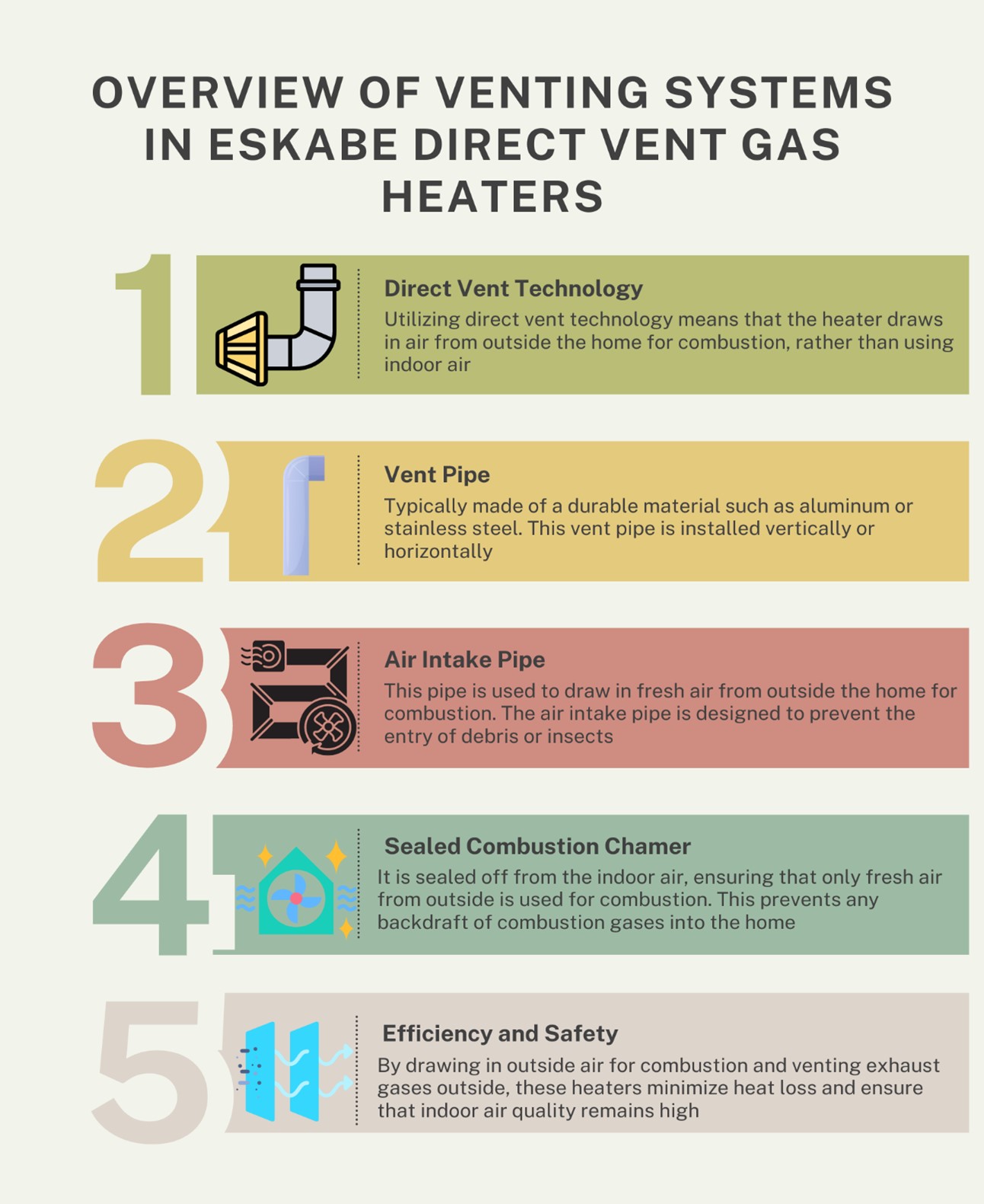
Direct Vent: Eskabe heaters utilize direct vent technology, which is a closed combustion system. This means that the heater draws in air from outside the home for combustion, rather than using indoor air. The combustion gases are then vented outside through a separate vent pipe, keeping indoor air clean and free of pollutants.

Vent Pipe: The vent pipe used in Eskabe heaters is typically made of a durable material such as aluminum or stainless steel. It is important that the vent pipe is properly sized and installed to ensure efficient venting of combustion gases.

Air Intake Pipe: This pipe is used to draw in fresh air from outside the home for combustion. It is designed to prevent the entry of debris or insects.

Sealed Combustion Chamber: Eskabe heaters feature a sealed combustion chamber, which further enhances safety and efficiency. This prevents any backdraft of combustion gases into the home.

Efficiency and Safety: The venting system used in Eskabe heaters contributes to their high efficiency and safety. By drawing in outside air for combustion and venting exhaust gases outside, these heaters minimize heat loss and ensure that indoor air quality remains high.

Installation Considerations: Proper installation of the venting system is crucial for the safe and efficient operation of Eskabe heaters. It is important to follow the manufacturer's guidelines and local building codes when installing the vent pipe and air intake pipe.

The venting systems used in Eskabe direct vent gas heaters are an integral part of their design, ensuring safe and efficient operation. These systems help to maintain indoor air quality while maximizing heating efficiency.


People Also Ask:

Q. What is a Rinnai EX22 Series Direct-Vent Wall Furnace best for?

A. The Rinnai EX22 Series Direct-Vent Wall Furnace is best for heating medium to large rooms in cold climates where safe, sealed combustion and consistent efficiency are critical. This model uses direct-vent, sealed combustion technology, meaning it draws combustion air from outside and vents exhaust gases outdoors through a dedicated vent system. That design improves indoor air quality and reduces drafts, which is especially important in tightly sealed homes and cabins. For rural homeowners in Alaska, the Pacific Northwest, or other cold regions, this type of system delivers steady heat without relying on indoor air for combustion.

Q. Who should use an Empire Direct-Vent Gas Wall Heater?

A. An Empire Direct-Vent Gas Wall Heater is ideal for rural homeowners, cabin owners, and small commercial facilities that need dependable heat without indoor combustion air. Because it is a sealed system, it operates independently from indoor air pressure changes, making it a strong fit for tighter homes and remote buildings. For off-grid or resilience-focused buyers, direct-vent heaters provide a balance of safety, efficiency, and straightforward operation.

Q. Can a Rinnai EX17 Direct-Vent Heater handle extreme cold in Alaska or northern climates?

A. Yes, a Rinnai EX17 Direct-Vent Heater is engineered to perform reliably in extreme cold conditions when properly sized for the space. Direct-vent systems draw outside air for combustion and vent exhaust directly outdoors, reducing backdrafting and heat loss. With correct BTU sizing and professional installation, these heaters provide stable, efficient heat during prolonged cold snaps.

Q. Is a direct-vent gas heater suitable for both beginners and professional installers?

A. Yes, direct-vent gas heaters are suitable for homeowners seeking straightforward operation and for licensed professionals performing permanent installations. Homeowners benefit from simple thermostat control and sealed combustion safety. Contractors appreciate predictable venting layouts and clear installation requirements that support code compliance.

Q. How efficient are direct-vent gas heaters compared to traditional vented heaters?

A. Direct-vent gas heaters are typically more efficient than traditional atmospheric vented heaters because they use sealed combustion and minimize indoor air loss. By drawing combustion air from outside, they prevent warm indoor air from being pulled into the burner. This helps maintain stable indoor temperatures and can reduce fuel consumption over time.

Q. What results should users expect from a direct-vent gas wall furnace?

A. Users should expect steady, even heat, improved indoor air quality, and lower heat loss compared to older vented systems. Because combustion is isolated, indoor oxygen levels remain stable and backdrafting risks are reduced. When properly sized and installed, direct-vent heaters provide reliable comfort throughout winter while maintaining efficient fuel use.

Q. Does a direct-vent gas heater work with both propane and natural gas?

A. Yes, many direct-vent gas heaters are available in versions configured for either propane (LP) or natural gas. Manufacturers such as Rinnai and Empire offer fuel-specific models or approved conversion kits. It is important to confirm the correct fuel type before installation to ensure safe and proper operation.

Q. What venting components does a direct-vent heater require?

A. A direct-vent heater requires a manufacturer-approved vent kit, typically a concentric or dual-pipe system that handles both intake air and exhaust gases. The vent can run horizontally through an exterior wall or vertically through the roof, depending on the design. Maintaining proper clearances to combustibles is essential for safe operation.

Q. Is a Rinnai or Empire direct-vent wall heater quiet and easy to maintain?

A. Yes, most modern direct-vent wall heaters operate quietly and require minimal routine maintenance. Sealed combustion chambers and controlled airflow support stable, low-noise operation suitable for living spaces. Periodic inspection of the vent system and burner components helps ensure long-term reliability, especially in remote areas.

Q. How do direct-vent gas heaters compare to non-vented (vent-free) gas heaters?

A. Direct-vent gas heaters vent all combustion gases outdoors, while vent-free heaters release combustion byproducts into the indoor space. Because direct-vent systems use sealed combustion, they provide stronger safety margins and improved indoor air quality. In cold, tightly sealed homes and remote installations, direct-vent heaters are generally the preferred long-term solution.


Explore Other News Vault Articles:

To top