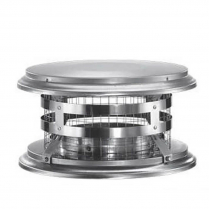
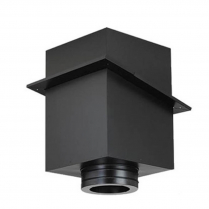
Class A Chimney, All Fuel Stove Pipe

Chimney Systems

DuraTech presents its all-fuel chimney systems, expertly crafted to vent low-heat residential appliances powered by wood, coal, oil, or gas. Often recognized as "Class A chimneys" or "Factory built chimneys," these systems prioritize safety and efficiency.

With Thermal Tech blanket insulation nestled between dual walls, DuraTech ensures the chimney's exterior remains cool, while the interior maintains high flue gas temperatures for consistent draft performance. Notably, the inner wall is 25% thicker than most competitors, eliminating the need for locking bands or mechanical fasteners and enhancing safety.

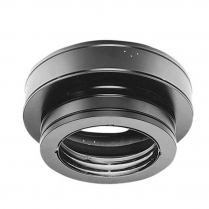
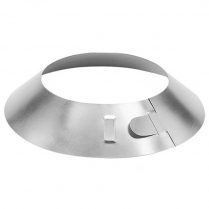
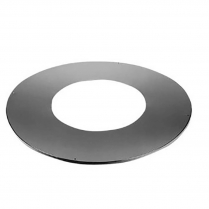
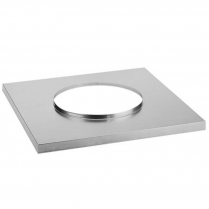
Our catalog, featuring top-tier all-fuel solutions from the renowned brand DuraVent, caters to diverse venting needs. From the Stove Pipe DT Snow splitter to the Stove Pipe DT Chase top flashing, we've got you covered.

DuraTech's 5"-6" all-fuel, double-wall system stands out for its continuous operation at 1000°F flue gas temperatures. It has surpassed UL's rigorous high-temperature tests, ensuring reliability even under extreme conditions.

Applications and Installation Solutions:

Applications

5"-8" DuraTech is a double-wall, all-fuel chimney system for use with wood stoves, fireplaces, furnaces, boilers, ranges, water heaters, or other appliances fueled by wood, oil, coal, or gas, and zero-clearance fireplaces that are factory-built.

Materials and Construction 
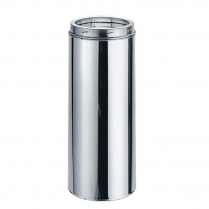
5”-8” diameter pipe features an inner wall of .020” 430 stainless steel. Outer wall options of .016” 430 stainless steel or .021” galvalume steel.   
A Thermal Tech (ceramic refractory) blanket insulation is encased between walls. Stainless steel end rings seal the pipe. 

DuraTech features lightweight insulation, twist-lock fittings, support boxes with factory-installed starter sections, elbows with 360° swivel base, select black finish pipe lengths, and five-foot length pipe sections.

Clearances 
2" clearance to combustibles.

Shrouds 
UL Listed with DuraVent shroud specifications. Information is available online at www.duravent.com or call and request L150.

Diameters 
5"-6"

Listings 
c-UL-us Listed to UL 103 HT and ULC S604 (MH7399) (Stainless steel outer wall required for installation in Canada.)

Typical Installations
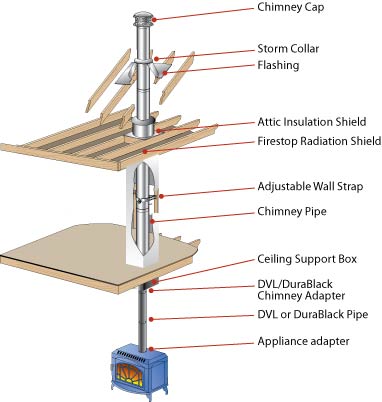
DuraTech Installation

Refer to our Typical Installation drawings to select the appropriate component parts for your installation.

  • DVL/DuraBlack Chimney Adapter must be used when connecting DVL pipe to a Ceiling Support Box or Finishing Collar. When connecting DuraBlack pipe, a DVL pipe to a Ceiling Adapter, DuraBlack Slip Connector, or Snap-Lock Adapter must be used.
  • Wall Thimble must be installed with an appropriate length of chimney pipe for all horizontal through-the-wall installations. To accommodate thicker walls, the telescoping pieces of the Wall Thimble can be separated, and a field-fabricated extension may be installed.
  • Attic Insulation Shield must be used in all installations that pass through an attic, regardless of whether the attic is insulated or not.
  • Firestop Radiation Shield must be used when a chimney passes through a floor or ceiling without a support box.


Planning Your Installation
Planning Installation

The following recommendations are general guidelines to assist in the layout and selection of the chimney components needed for your installation. Always follow DuraVent Installation instructions before installing your chimney system., found with the cap or support box.

  • The diameter of the chimney should match the outlet size of the appliance. An improperly sized chimney results in poor draft and excessive creosote formation.
  • Measure the diameter of the appliance flue outlet. Select the chimney and either DVL or DuraBlack connector stovepipe with the same size diameter as the appliance flue outlet. For fireplace installations, refer to the sizing chart in the back of this catalog.
  • Determine if the installation is a through-the-roof installation or a through-the-wall installation. A through-the-wall installation will require additional components (Wall Thimble, Tee/ Cap, Tee Support, and Wall Straps).
  • Install the chimney in the interior of the structure whenever possible. A cold exterior chimney will produce less draft and will generate more creosote.
  • If possible, avoid offsets that serve to restrict the natural draft. A straight vertical installation is more efficient and less likely to develop creosote. If an offset is required to avoid rafters or other obstructions, measure the horizontal distance required and the vertical height available. Both 15° and 30° elbows are available. Elbows have a 360° swivel base to allow orientation of elbow direction only. Elbows are fixed at 15° or 30°. Elbows greater than 30° are not allowed in the United States. A maximum of two offsets in a single installation are permitted. Refer to the offset table in the back section of this catalog. At least one Elbow Strap is required for each offset. Elbow Straps ensure adequate support.
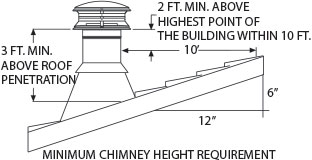
  • Determine the minimum chimney height above the roof line. Building codes require a minimum of 3' above the roof penetration and at least 2' higher than any portion of a building within 10'. See figure 1. The termination cap is installed above that point. If chimney extends 5' or more above the roof penetration an extended roof bracket is required. An additional roof bracket is needed every 5'.
  • Measure the roof pitch. For example, a 6/12 pitch has a vertical rise of 6" over a horizontal distance of 12". Select the appropriate flashing.
  • Determine the total length of the chimney and stovepipe required for the installation. To calculate the installed per length of 5"-8" DuraTech pipe, subtract 1 ¼" per joint. For 10"-24" diameter, subtract ¾" per joint of pipe. Subtract 1 ¼” per joint of DuraBlack stovepipe. Subtract 1 ½" per joint of DVL stovepipe. Minimum chimney height, at sea level, of straight vertical chimney is 10' to 15' above the appliance outlet. Higher elevations, or the use of elbows or a tee, will require approximately 30% to 60% more height to provide for an adequate draft.
  • For a UL-approved shroud, see the DuraTech Shrouds Installation Instructions (L157). View online at www.duravent.com, under catalogs and instructions.
  • Be fire safe. Maintain at least 2" clearance to combustibles. Follow local building codes and have your chimney inspected by a certified professional.


People Also Ask:

Q. What is an all-fuel stove pipe?

A. An all-fuel stove pipe is a type of stove pipe that is designed to be used with multiple types of fuels, including wood, coal, gas, and oil.

Q. What materials are all-fuel stove pipes made of?

A. All-fuel chimney is stainless steel where it matters. The inner liner is stainless because it meets the hottest, most acidic gases, and the outer casing is stainless or galvanized steel depending on the product and whether it is intended to be visible. Between the two walls sits packed insulation, which is what keeps the flue gases hot and the outer surface cool enough to run close to the building. Black painted steel is single wall connector pipe, a different product for use inside the room only, and it is never a substitute for all-fuel chimney.

Q. Can I install my own all-fuel stove pipe?

A. While it is possible to install your own all-fuel stove pipe, it is recommended that you hire a professional to ensure that the installation is done correctly and safely. Improper installation can lead to chimney fires and other hazards.

Q. Can I use an all-fuel stove pipe in a masonry chimney?

A. Yes, all-fuel stove pipes can be used with masonry chimneys as long as they are installed correctly and meet local building codes and regulations.

Q. Can an all-fuel stove pipe be used with a fireplace insert?

A. Yes, all-fuel stove pipes can be used with fireplace inserts as long as they are installed correctly and meet local building codes and regulations. However, it is important to choose a stove pipe that is compatible with your specific insert model.

Q. Can an all-fuel stove pipe be used with a pellet stove?

A. A pellet appliance must be vented with listed pellet vent, not with all-fuel chimney, because it is a sealed fan-driven system with cooler and more acidic exhaust. There is one arrangement that causes confusion. Where an existing all-fuel chimney is already in place, many pellet installations run pellet vent, or an appropriately sized liner, up inside it and seal top and bottom. That is using the existing chimney as a chase, which is not the same as venting the appliance with all-fuel pipe. Check the appliance manual, and size the liner to the stove rather than to the opening.

Q. Can I use an all-fuel stove pipe with a wood-burning stove?

A. Yes, all-fuel stove pipes can be used with wood-burning stoves, as well as stoves that burn other types of fuels. Just make sure that the stove pipe you choose is compatible with the type of stove you have.

Q. Can an all-fuel stove pipe be used with a boiler or furnace?

A. Yes, for the appliances all-fuel chimney is listed for, and oil-fired furnaces and boilers are the common case. That is what the name means: the product is listed for solid fuel and oil, so an oil furnace or boiler that needs a conventional flue is a normal application, whether the chimney is a listed all-fuel system or a properly lined masonry one. Two exceptions matter. High-efficiency condensing appliances vent through their own manufacturer-specified system, often plastic, because their exhaust is cool and wet. And a direct vent furnace uses its own sealed sidewall terminal instead. Always vent to the appliance manual.

Q. How can I prevent creosote buildup in my all-fuel stove pipe?

A. To prevent creosote buildup in your all-fuel stove pipe, burn only dry, seasoned wood, and avoid burning trash, cardboard, or other materials that can produce excess soot and ash. Also, make sure to clean your stove pipe regularly to remove any creosote that may have accumulated.

Q. How can I ensure that my all-fuel stove pipe is installed safely and correctly?

A. To ensure that your all-fuel stove pipe is installed safely and correctly, hire a professional chimney service to do the installation. Make sure that the installer is licensed and insured and that they follow all local building codes and regulations. Also, be sure to have your stove and chimney inspected regularly to ensure that they are in good working condition.

Q. What Clearance Does All-Fuel Chimney Need to Combustibles?

A. Insulated all-fuel chimney is designed to run close to the building, and its listing states the required air space to combustibles. That clearance is small compared with connector pipe, but it is not zero and it must be maintained the whole way, including where the chimney passes through a ceiling, a floor or the roof. Two points catch people out. The air space must stay open, so never pack insulation, wood shavings or blown attic insulation against the chimney to close a gap. And penetrations must use the listed support box, firestop or flashing made for that system, which is what holds the required spacing where you cannot see it.

Q. How High Above the Roof Does the Chimney Need to Go?

A. High enough to clear the roof and anything near it, which is what the widely used three-two-ten rule expresses: the chimney should extend at least three feet above the point where it passes through the roof, and at least two feet higher than anything within ten feet of it. This is not a formality. A chimney that finishes too low sits in the turbulent air that wind creates over a roof, and the draft becomes unstable, which shows up as smoke in the room when the wind shifts. Nearby trees, a taller adjoining roof or a snow load on the roof can all put the termination effectively lower than it looks on paper.

Q. What Parts Do I Need for a Complete Chimney System?

A. More than lengths of pipe, and this is where orders come up short. A typical installation needs the connector pipe in the room, a ceiling support box or wall thimble at the transition, the chimney lengths themselves, an attic insulation shield where it passes through an attic, roof flashing and a storm collar, bracing if the chimney extends well above the roof, and a cap. Elbows and offsets need their own supports. Order the whole system from one manufacturer so the listings and joints match, and count the components against the run before ordering, since a missing support box stops an installation on the day.

Q. Where Does Connector Pipe Stop and All-Fuel Chimney Begin?

A. At the room boundary. Single wall or double wall connector pipe runs from the appliance up to the ceiling or across to the wall and stops there, in open air where it can be inspected and swept. All-fuel chimney takes over for everything that passes through the building and continues above the roof, joined at the transition with the listed support box or thimble. Connector pipe is never permitted inside a wall, ceiling or attic. If you are pricing an installation, budget for both parts from the start, because discovering at the ceiling that the chimney has not been ordered is a common and expensive surprise.

Q. Can I Use All-Fuel Chimney With an Oil Drip Stove?

A. Yes, and for a gravity-fed oil drip stove the chimney is not an accessory, it is the engine. These appliances have no fan, so the natural draft created by the chimney is what pulls combustion air through the burner, and the chimney height and construction determine whether the stove burns cleanly at all. Too short and it will not draw enough air, giving a smoky sooty burn. Too tall and it can pull too much, cooling the burner and building carbon. Follow the appliance manual for the height range it is designed around, size the flue to the appliance outlet, and keep the run as straight as the building allows.

Q. How Do Snow and Ice Affect the Chimney?

A. In three ways worth planning for. Ice can form on the cap and screen and choke the flue, which kills the draft and can push exhaust back into the house. Snow sliding off a metal roof can strike the chimney and bend or shift it, so site it clear of the shed path or fit snow retention above it. And deep snow on the roof effectively lowers the termination, which can spoil the draft in exactly the weather when the stove is working hardest. Check the cap after heavy snowfall and after any wind event, and if the chimney extends well above the roof, make sure it is braced for the load it will see.

91 Results

Per Page
To top