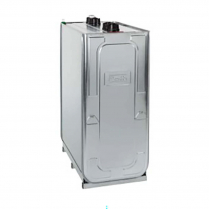
Roth Double-Wall Heating Oil Tanks: Safety & Reliability

Burning wood allows you to essentially free yourself (partly at least) from the clutches of energy providers. Wood burning is largely considered carbon neutral. This means that the amount of carbon dioxide absorbed by a tree over its lifetime is roughly equivalent to the amount released when the wood is burned – this means that the amount of extra CO2 added to the environment is effectively zero.

Not only are wood stoves becoming more eco-friendly, but they’re also becoming more efficient. This means that more heat is used to heat your home rather than being expelled up the chimney.

Wood heating equipment solutions in our catalog include products from leading brands like Homcomfort, Nova, Osburn, and Solo Stoves (filter by brand using the brand list on the left side of the page).

Whether you're looking for a simple or luxurious fireplace insert or portable fire pits, we have all the wood equipment options available to you, from fireplaces, inserts, stoves, accessories, or outdoor heating.

 
Specialty Heating Equipment Solutions:

Wood Fireplaces: The Heart of a Home

There's something timeless about a wood-burning fireplace. Beyond its functional purpose of providing warmth, it stands as a testament to traditions and memories. Serving as a natural focal point in any living space, a wood-burning fireplace commands attention and evokes feelings of comfort and nostalgia. As families gather around, it becomes more than just a source of heat; it transforms into the heart of the home, offering a unique ambiance that modern accessories struggle to replicate. The crackling of the wood, the dance of the flames, and the warmth it radiates make it an irreplaceable centerpiece in any living room.

Wood Fireplace Inserts: Modern Efficiency Meets Traditional Warmth

For those who cherish the charm of a traditional wood fireplace but desire modern efficiency, wood fireplace inserts are the perfect solution. These inserts are meticulously designed to fit within existing wood fireplaces, offering an upgrade in both aesthetics and functionality. By choosing a wood fireplace insert, homeowners can revitalize drafty, open wood fireplaces, enhancing their heating capacity and efficiency. Yet, even with these advancements, the unmatched warmth, ambiance, and cherished memories that only wood fireplaces can evoke remain intact.

Wood Stoves: Economical Warmth for Every Home

Wood stoves are more than just heating appliances; they are a testament to cost-effective and sustainable living. Wood, as a fuel source, is not only abundant but also remarkably economical. When compared to oil, gas, or electricity, wood emerges as a clear winner in terms of cost per BTU. For homeowners keen on maximizing their savings, strategic zone heating with wood stoves can lead to substantial reductions in utility bills. Year after year, these savings accumulate, making wood stoves a wise investment for both the wallet and the environment.

Wood Outdoor Heating: The Joy of Open-Air Warmth

In recent years, the allure of outdoor heating has seen a significant surge, with portable fire pits leading the trend. These fire pits encapsulate the joy of open-air warmth, allowing individuals to experience the magic of a campfire almost anywhere and anytime. Whether it's a backyard gathering, a camping trip, or a beach bonfire, portable fire pits adapt to various scenarios, overcoming challenges and ensuring that the warmth and ambiance of a wood fire can be enjoyed to the fullest.
 
People Also Ask:

Q. How Do I Size a Wood Stove for My Home?

A. Square footage alone is a poor guide in Alaska. Insulation, ceiling height, window area, how open the floor plan is and how cold it actually gets where you live all change the answer, and the same stove that suits a tight new build can leave a 1970s cabin cold at forty below. Manufacturers publish a heating range for every model, and the reliable method is to match that range to your building rather than to your floor area alone. Oversizing is the more common and more damaging mistake. A stove too large for the space gets damped down to keep the room comfortable, and a damped-down fire burns cool and incomplete, which wastes wood and coats the flue with creosote. A correctly sized stove runs hot and clean most of the time. Tell us your square footage, construction and coldest design temperature and we will narrow the range with you.

Q. What Clearances Does a Wood Stove Need to Walls and Furniture?

A. Every listed wood stove is laboratory tested with its own required clearances to combustible walls, and those distances are printed on the appliance label and in the manual. Those are the figures that govern your installation, and they differ from model to model, so a clearance you remember from a previous stove does not carry over. Where a stove is unlisted, NFPA 211 applies a default of 36 inches from combustibles, which is why unlisted appliances demand so much more room. Approved wall shielding with a ventilated air gap can reduce a required clearance, but only by the amount the stove manufacturer or the shield's own listing permits, and only when the shield is built and spaced exactly as specified. Furniture, firewood, curtains and drying laundry need distance too. Radiant heat ignites nearby material over time even when nothing ever touches the stove.

Q. Does Double Wall Stove Pipe Reduce the Clearance I Need?

A. Yes, and that is the usual reason to choose it. Double wall connector pipe carries an air space between an inner and an outer wall, so its outer surface runs far cooler than single wall pipe at the same flue temperature. Its listed clearance to combustibles is correspondingly smaller, and that difference frequently decides whether a stove fits a tight corner, a small cabin or a room where the pipe must pass close to a wall. Double wall also keeps flue gases hotter on the way up, which improves draft and slows creosote formation, an advantage in an Alaska winter when a cold flue is hard to start. Two separate requirements still apply: the pipe's listing governs the pipe, and the stove's own label governs the stove. Meeting one does not satisfy the other, and both must be met.

Q. What Kind of Stove Pipe and Chimney Does a Wood Stove Require?

A. Two different products doing two different jobs, and confusing them is the most expensive mistake in a wood stove installation. Connector pipe, single or double wall, runs from the stove outlet to the ceiling or wall and stays entirely within the room. From that point outward you need insulated all-fuel chimney, commonly called Class A, which is what penetrates the building and carries the flue above the roof. Connector pipe must never be used as the chimney itself, and it must never pass through a wall, ceiling or attic. Diameter follows the stove's flue outlet, and reducing it starves the draft and pushes smoke into the room. Keep horizontal runs short, maintain a continuous upward slope, and finish the chimney high enough above the roofline that wind cannot spoil the draft. Snow load and roof shedding matter here too.

Q. Do I Need a Hearth Pad or Floor Protection Under a Wood Stove?

A. Almost always, and the requirement is specific rather than general. A listed stove states the floor protection it needs, both the type and how far that protection must extend in front of the loading door and out to each side, so that falling embers and radiant heat never reach a combustible floor. Some stoves need only ember protection, a non-combustible surface with no insulating value. Others specify a minimum R-value beneath them, and an attractive tile laid straight onto plywood will not satisfy that. Read the manual before buying the pad, because the required dimensions in front of the door are commonly larger than people expect and a pad that is too small cannot be corrected later without moving the stove. On an uneven cabin floor, confirm the pad sits flat and fully supported.

Q. What Is an EPA-Certified Wood Stove, and Does It Matter in Alaska?

A. An EPA-certified stove has been tested to the 2020 New Source Performance Standard, which limits particulate emissions to 2.0 grams per hour when burning cordwood. It matters here for two practical reasons. First, the same design changes that cut emissions also extract more heat from each piece of wood, so a certified stove burns less wood for the same warmth across a long heating season. Second, parts of the Interior, including Fairbanks and North Pole, are designated PM2.5 nonattainment areas where local rules govern solid-fuel burning, and those rules can affect what may be installed and when burning is permitted. Check your borough's current requirements before purchasing, and keep the certification label and documentation. It may be needed for a permit, for an insurance inquiry or for any change-out or rebate program running in your area.

Q. Should I Choose a Wood Stove, a Fireplace Insert or a Fireplace?

A. What you already have narrows it quickly. If there is an existing masonry fireplace, an insert is the efficient way to use that opening and its chimney, and it converts a feature that often loses more heat than it delivers into a real heater. If there is no fireplace, a freestanding stove is usually the better heat source, because it stands out in the room and radiates from the top, sides and back rather than from a single face set into a wall. A new wood-burning fireplace is chosen mainly for the appearance of an open fire rather than for output. Rank the three factors in this order: how much heat you need, what structure and chimney already exist, and how you want it to look. The decision generally makes itself once those are settled.

Q. How Dry Does Firewood Need to Be?

A. Below 20 percent moisture content, measured with a moisture meter on a freshly split face rather than on the outside of a log, which always reads drier than the wood within. Wet wood spends a large share of its energy boiling off water instead of heating the house, so the fire runs cooler, the glass sooners over and unburned gases condense in the flue as creosote. Split it, stack it off the ground in a single row with the top covered and the sides left open to the wind, and give it a full season at minimum. Birch and spruce dry at noticeably different rates, and a cool damp summer slows everything, so season by measurement rather than by the calendar. Wood that hisses, bubbles at the ends or refuses to catch is telling you it is not ready.

Q. How Often Should a Wood Stove Chimney Be Cleaned?

A. Have the chimney inspected at least once a year, and swept whenever creosote has built to any meaningful thickness. Frequency depends on how you burn, not on the calendar alone. A stove running continuously through an Alaska winter, or one burning wood that never fully seasoned, or one habitually damped down low overnight, can need sweeping more than once in a single season. Creosote is the fuel in a chimney fire, so this is the most important maintenance a wood stove has and the cheapest insurance available. Inspect before the heating season begins rather than after the first hard cold snap, when everyone calls at once and you are least able to go without heat. While you are up there, check the cap and screen for blockage and confirm nothing has nested in the flue over summer.

Q. Will a Wood Stove Still Heat My House During a Power Outage?

A. Yes, and it is one of the main reasons Alaska homes keep a wood stove alongside their primary system, in the same role as a non-electric oil heater. A wood stove needs no electricity to produce or distribute heat, unlike a furnace or boiler that depends on a circulator, a blower or electronic controls and stops entirely when the power does. If your stove has an optional blower, only the blower stops. The stove keeps working by radiation and natural convection. Expect the heat to stay concentrated in the stove's own room without the fan, so choose the location for how the house would need to be heated during a multi-day outage rather than only for appearance. Keep a few days of dry wood inside where it stays dry and thawed.

134 Results

Per Page
To top